Why Is Erythropoietin Low in Kidney Disease and How Is It Treated?
Feeling tired or weak is a common complaint among people living with kidney disease. Some patients may feel exhausted even after getting enough sleep, while others may notice weakness, reduced energy, poor concentration, or difficulty doing their usual daily activities.
Many people may think that this tiredness is simply due to age, stress, lack of sleep, or the kidney disease itself. However, anemia is one of the important reasons for fatigue in people with chronic kidney disease.
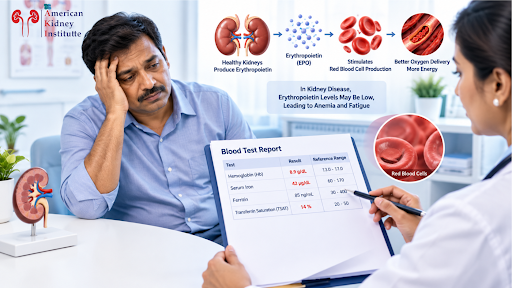
One of the major causes of anemia in kidney disease is a reduction in the production of a hormone called erythropoietin, also known as EPO. Healthy kidneys normally produce erythropoietin, which signals the bone marrow to make red blood cells.
When kidney function decreases significantly, the kidneys may not produce enough erythropoietin. As a result, the bone marrow receives less stimulation to produce red blood cells, which can contribute to anemia.
However, low erythropoietin is not the only reason kidney patients develop anemia. Iron deficiency, inflammation, blood loss, nutritional problems, and other medical conditions can also contribute.
Understanding the connection between kidney disease, erythropoietin, hemoglobin, iron, and fatigue can help patients seek the right evaluation and treatment instead of simply accepting constant tiredness as a normal part of aging.
What Is Erythropoietin?
Erythropoietin is a hormone that plays an important role in red blood cell production.
Most erythropoietin in adults is produced by specialized cells in the kidneys. When the body senses that tissues are not receiving enough oxygen, the kidneys normally increase erythropoietin production.
Erythropoietin then travels through the bloodstream to the bone marrow. It stimulates the bone marrow to produce more red blood cells.
Red blood cells contain hemoglobin, a protein that carries oxygen from the lungs to different parts of the body.
Therefore, erythropoietin, red blood cells, hemoglobin, and oxygen delivery are closely connected.
When kidney function becomes severely reduced, the kidneys may lose some of their ability to produce an adequate amount of erythropoietin. This can reduce red blood cell production and contribute to anemia.
Why Does Erythropoietin Become Low in Kidney Disease?
Healthy kidneys have several important functions, including filtering waste products, regulating fluid and electrolyte balance, and producing hormones.
As chronic kidney disease progresses, damage to the kidney tissue can affect these functions.
The cells responsible for producing erythropoietin can become less effective. Consequently, erythropoietin production may not increase adequately even when the body needs more red blood cells.
This is one reason anemia becomes increasingly common as kidney disease advances.
The relationship is not always simple. Some patients with kidney disease may have anemia even when erythropoietin levels are not extremely low because their bone marrow may not respond normally to erythropoietin.
Inflammation, iron deficiency, infection, nutritional deficiencies, and blood loss can also interfere with healthy red blood cell production.
Therefore, doctors do not usually diagnose the cause of anemia simply by looking at erythropoietin levels. A complete evaluation is needed.
How Does Low Erythropoietin Cause Anemia?
The process can be understood in a simple way.
The kidneys produce erythropoietin, and erythropoietin tells the bone marrow to produce red blood cells. When kidney disease reduces this signal, the bone marrow may produce fewer red blood cells.
With fewer red blood cells, the amount of oxygen carried to body tissues can decrease.
This can result in symptoms such as tiredness, weakness, reduced stamina, dizziness, headaches, shortness of breath during activity, and difficulty concentrating.
The severity of symptoms can vary considerably from one person to another.
A patient with a mildly reduced hemoglobin level may have few symptoms, while another patient with more significant anemia may feel extremely tired and weak.
Is Tiredness Always Due to Low Erythropoietin?
No.
This is an important point for kidney patients to understand.
Fatigue can have many causes, and kidney disease itself can contribute to reduced energy. Anemia is one important cause, but it is not the only possible explanation.
A patient may have iron deficiency, vitamin deficiencies, infection, inflammation, poor nutrition, sleep problems, heart disease, thyroid problems, medication-related effects, or other conditions that cause fatigue.
For this reason, patients should not assume that every episode of tiredness means they need an erythropoietin injection.
A doctor needs to identify the underlying cause before deciding on treatment.
What Are the Common Symptoms of Anemia in Kidney Disease?
Anemia can develop gradually, so some patients may not immediately recognize the symptoms.
The body may adapt to a gradual reduction in red blood cells, and symptoms may become more noticeable as anemia becomes more severe.
Common symptoms can include:
- Persistent tiredness and weakness that interfere with normal daily activities. A patient may feel exhausted after routine activities such as walking, climbing stairs, household work, or shopping.
- Shortness of breath, especially during physical activity. When oxygen delivery is reduced, the heart and lungs may need to work harder to meet the body’s oxygen requirements.
- Dizziness, headaches, or light-headedness. These symptoms can occur in some people with anemia, although they may also have other causes.
- Reduced concentration and difficulty feeling mentally alert. Some patients describe this as feeling mentally tired or unable to focus properly.
- Pale skin or pale appearance. Reduced hemoglobin can sometimes make the skin, lips, or inside of the eyelids appear paler than usual.
- Reduced exercise tolerance. Activities that were previously easy may become tiring, particularly when anemia becomes more significant.
These symptoms should not automatically be attributed to kidney disease or age. Medical evaluation can help identify whether anemia or another condition is responsible.
Understanding Chronic Kidney Disease Symptoms and Anemia
Many patients search for Chronic Kidney Disease Symptoms when they begin experiencing fatigue, weakness, swelling, changes in urination, or other health problems.
However, chronic kidney disease can sometimes progress without obvious symptoms during its early stages. As kidney function declines, symptoms may become more noticeable.
Anemia is one of the complications that may develop as kidney disease progresses.
Because fatigue has many possible causes, checking hemoglobin and iron-related blood tests can help determine whether anemia is contributing to the patient’s symptoms.
How Does Iron Deficiency Cause Anemia in Kidney Patients?
Iron is essential for producing hemoglobin.
Even if the body receives the erythropoietin signal to produce red blood cells, it still needs sufficient iron to make adequate hemoglobin.
Kidney patients can develop iron deficiency for several reasons.
Reduced appetite can lead to inadequate nutritional intake. Some patients may also have gastrointestinal symptoms that make eating difficult.
In people with advanced kidney disease, chronic inflammation can affect how the body stores and uses iron. Blood loss can also occur, including blood loss related to repeated blood testing or dialysis treatment.
Some patients may also have gastrointestinal blood loss or other sources of blood loss that need to be investigated.
When iron stores are inadequate, the bone marrow cannot efficiently produce healthy red blood cells.
This is why evaluating and treating iron deficiency is an important part of managing anemia in kidney disease.
What Tests Are Used to Evaluate Anemia?
A doctor usually looks at more than one blood test when evaluating anemia.
A complete blood count (CBC) provides information about hemoglobin and red blood cells.
Iron studies are also important. These may include serum ferritin and transferrin saturation (TSAT), depending on the clinical situation.
Other tests may be required if the doctor suspects additional causes of anemia.
Important tests may include:
- Hemoglobin: This indicates the amount of hemoglobin in the blood and helps identify and monitor anemia.
- Complete blood count: This provides information about red blood cells and other blood cell measurements.
- Serum ferritin: This provides information about stored iron, although ferritin can also be affected by inflammation.
- Transferrin saturation: This helps assess how much iron is available for red blood cell production.
- Additional tests when necessary: Depending on the patient’s symptoms and medical history, doctors may investigate vitamin deficiencies, blood loss, inflammation, thyroid problems, or other conditions.
The results need to be interpreted together rather than using one number in isolation.
How Is Iron Deficiency Anemia Treated in Kidney Disease?
If testing shows that iron deficiency is contributing to anemia, the doctor may recommend iron replacement.
Iron can sometimes be given orally as tablets or capsules. However, oral iron may not be sufficient or well tolerated in every patient.
Some patients with advanced kidney disease or those receiving dialysis may require intravenous iron.
The choice depends on the patient’s iron levels, severity of anemia, treatment response, tolerance, dialysis status, and overall medical condition.
Patients should not start iron supplements on their own because excessive iron can also be harmful.
The treatment should be based on blood test results and medical supervision.
When Are Erythropoietin Injections Used?
If anemia continues despite correction of iron deficiency and other treatable causes, doctors may consider medications called erythropoiesis-stimulating agents (ESAs).
These medicines act similarly to the body’s natural erythropoietin and stimulate red blood cell production.
They may be used in selected patients with chronic kidney disease when clinically appropriate.
The decision to start an ESA depends on several factors, including hemoglobin level, symptoms, iron status, kidney disease stage, cardiovascular risk, and whether the patient is receiving dialysis.
Treatment is not simply aimed at making hemoglobin reach a normal level in every patient.
Doctors generally use individualized targets because excessively increasing hemoglobin with ESA treatment can increase certain risks.
Therefore, these injections should only be given under appropriate medical supervision.
Why Is Iron Treatment Sometimes Needed Before Erythropoietin?
Iron is one of the raw materials required to make hemoglobin.
Imagine erythropoietin as the signal telling the bone marrow to increase production. If there is not enough iron available, the bone marrow may still struggle to produce adequate red blood cells.
This is why doctors commonly assess iron status before or during treatment with erythropoiesis-stimulating agents.
If iron deficiency is present, correcting the deficiency may improve anemia and may also improve the response to ESA therapy.
The treatment plan is therefore based on identifying the cause rather than immediately giving an erythropoietin injection to every patient with low hemoglobin.
What Is the Connection Between Chronic Kidney Disease Symptoms and Low Hemoglobin?
When patients research Chronic Kidney Disease Symptoms, fatigue is often one of the concerns they want to understand.
Low hemoglobin can make the fatigue associated with kidney disease more noticeable because the body’s tissues may receive less oxygen.
This can affect physical activity, concentration, work, and overall quality of life.
However, fatigue should always be evaluated rather than automatically blamed on low hemoglobin.
A simple blood test can provide important information about whether anemia may be contributing to the problem.
Can Anemia in Kidney Disease Be Prevented?
Anemia cannot always be completely prevented because reduced erythropoietin production is linked to kidney damage.
However, early identification and appropriate management of contributing factors can help control anemia.
Patients should attend regular kidney follow-ups and complete blood tests recommended by their healthcare team.
Adequate nutrition is also important. Patients should not unnecessarily restrict foods or take supplements without professional guidance because kidney-friendly nutrition must be balanced carefully.
Iron, vitamin B12, folate, protein, and other nutritional factors may need to be considered depending on the patient’s condition.
Why Should Kidney Patients Not Ignore Persistent Fatigue?
Persistent fatigue can affect much more than energy levels.
When a patient feels weak all the time, they may become less physically active. Reduced activity can contribute to muscle weakness and loss of physical fitness.
Fatigue can also affect work, family activities, mood, concentration, and overall quality of life.
Instead of simply accepting tiredness as a normal part of kidney disease, patients should discuss persistent symptoms with their nephrologist.
The cause may be anemia, but other treatable problems can also be responsible.
Chronic Kidney Disease Symptoms That Should Not Be Ignored
Some Chronic Kidney Disease Symptoms require medical evaluation, particularly when they are new, worsening, or occurring together.
Patients should discuss persistent swelling, unusual tiredness, changes in urination, nausea, loss of appetite, breathlessness, persistent itching, or changes in blood pressure with their healthcare provider.
Severe breathlessness, chest pain, fainting, severe weakness, confusion, or other serious symptoms may require urgent medical attention.
Symptoms alone cannot determine how well the kidneys are functioning. Blood and urine tests are needed to assess kidney function and related complications.
How Can Patients Support Better Anemia Management?
Managing anemia is not based on one medicine alone.
Patients can support their treatment by following the medical plan, attending scheduled blood tests, taking prescribed medicines correctly, and informing their doctor about new symptoms.
Nutrition also matters, but kidney patients should avoid following generic high-iron or high-protein diets without professional advice.
Some foods that are considered healthy for the general population may contain high levels of potassium, phosphorus, or other nutrients that need to be monitored in advanced kidney disease.
Therefore, nutritional advice should be personalized.
Important steps for kidney patients:
- Attend regular nephrology appointments and complete recommended blood tests. Monitoring hemoglobin, iron status, kidney function, and other relevant parameters helps the doctor understand whether treatment is working.
- Take iron tablets, injections, or other prescribed medicines exactly as directed. Do not increase or reduce the dose yourself because treatment requirements depend on blood test results.
- Do not assume that every episode of tiredness requires an erythropoietin injection. Other causes such as iron deficiency, infection, inflammation, nutritional problems, or other medical conditions may need to be addressed first.
- Follow a balanced kidney-friendly diet recommended by your healthcare team. Adequate nutrition supports overall health while dietary restrictions can be adjusted according to kidney function and blood test results.
- Report worsening fatigue or breathlessness to your nephrologist. These symptoms can have several causes and should be evaluated rather than ignored.
Understanding Chronic Kidney Disease Symptoms and When to Consult a Nephrologist
Patients who notice Chronic Kidney Disease Symptoms should not wait until the symptoms become severe before seeking medical advice.
People with known kidney disease should maintain regular follow-up even if they feel well because some complications can develop gradually.
Anemia is one such complication that can often be evaluated through routine blood testing.
Early assessment allows the doctor to identify whether the patient has low hemoglobin, iron deficiency, or another cause of fatigue.
Anemia Treatment at American Kidney Institute
At American Kidney Institute, kidney-related conditions are evaluated with attention to the patient’s individual medical condition, laboratory results, symptoms, and stage of kidney disease.
Anemia management in kidney disease requires identifying the reason for low hemoglobin rather than treating every patient in exactly the same way.
When appropriate, doctors may evaluate hemoglobin and iron status and determine whether iron supplementation, other treatments, or erythropoiesis-stimulating therapy is needed.
The treatment plan may also involve monitoring the patient’s response over time and adjusting therapy according to follow-up blood tests.
Patients experiencing persistent fatigue or weakness should discuss their symptoms with a nephrologist so that the underlying cause can be properly evaluated.
Can Treating Anemia Reduce Tiredness?
Treating anemia may help improve fatigue and physical functioning in patients whose symptoms are related to anemia.
However, the amount of improvement varies from person to person.
If fatigue has several causes, correcting anemia alone may not completely eliminate tiredness.
For example, a patient may have anemia together with poor sleep, nutritional problems, heart disease, medication effects, or another medical condition.
This is why a complete medical assessment is important.
The goal is not simply to increase hemoglobin as much as possible. The goal is to manage anemia safely while considering the patient’s overall health.
Frequently Asked Questions
1. Why does erythropoietin become low in kidney disease?
Healthy kidneys produce most of the body’s erythropoietin, which signals the bone marrow to make red blood cells. As kidney function declines, erythropoietin production may become inadequate. This can contribute to anemia and symptoms such as tiredness and weakness.
2. Does low erythropoietin always cause anemia?
Low erythropoietin is an important contributor to anemia in chronic kidney disease, but it is not the only cause. Iron deficiency, inflammation, blood loss, nutritional deficiencies, and other medical problems can also contribute. Doctors usually evaluate several factors before deciding on treatment.
3. Why do kidney patients feel tired so often?
Fatigue in kidney disease can occur because of anemia, reduced kidney function, poor nutrition, inflammation, sleep problems, or other health conditions. Low hemoglobin reduces oxygen delivery to tissues and can make tiredness more noticeable. Persistent fatigue should be discussed with a nephrologist.
4. What blood tests are important for kidney-related anemia?
A complete blood count helps measure hemoglobin and red blood cell parameters. Doctors may also check ferritin and transferrin saturation to understand iron availability. Additional tests may be recommended depending on the patient’s symptoms and medical history.
5. Can iron tablets treat anemia in kidney disease?
Iron tablets may help some patients when iron deficiency is present, but they are not suitable or sufficient for everyone. Some patients, particularly those receiving dialysis, may require intravenous iron. The treatment route should be selected based on laboratory results and medical advice.
6. When are erythropoietin injections given?
Erythropoiesis-stimulating medicines may be considered for selected patients with chronic kidney disease when anemia remains significant after addressing correctable causes such as iron deficiency. The decision depends on hemoglobin, iron status, symptoms, kidney disease stage, and overall health. These medicines require medical monitoring.
7. Can erythropoietin injections completely cure anemia?
Erythropoietin treatment can stimulate red blood cell production, but it does not cure the underlying kidney disease. The response also depends on adequate iron availability and other health factors. Treatment is monitored carefully to maintain an appropriate hemoglobin level and reduce potential risks.
8. Is tiredness always one of the Chronic Kidney Disease Symptoms?
Fatigue can occur in chronic kidney disease, particularly when complications such as anemia develop. However, tiredness is not specific to kidney disease and can have many other causes. Medical evaluation and blood tests are important when fatigue persists.
9. Can kidney patients take iron supplements without a blood test?
It is better not to take iron supplements without medical advice because iron deficiency should be confirmed and treatment should be individualized. Excess iron can also cause problems. Your doctor can determine whether iron treatment is appropriate based on your blood tests.
10. Can improving hemoglobin reduce weakness?
If anemia is a major cause of weakness, appropriate treatment may improve energy levels and physical functioning. However, fatigue can have multiple causes, so improvement varies between patients. Treating the underlying causes rather than focusing only on hemoglobin is important.
11. Why should kidney patients check their iron levels?
Iron is necessary for producing hemoglobin and healthy red blood cells. A patient may have low hemoglobin and also have inadequate iron available for red blood cell production. Checking iron status helps doctors decide whether iron treatment may be needed.
12. Should older kidney patients assume that tiredness is because of age?
No. Although energy levels can change with age, persistent or worsening fatigue should not automatically be attributed to aging. Anemia, kidney disease complications, nutritional deficiencies, infections, heart problems, and other treatable conditions may cause similar symptoms.
13. What should a kidney patient do if tiredness is getting worse?
A kidney patient with worsening or persistent fatigue should consult their nephrologist rather than self-treating with supplements or injections. The doctor may evaluate hemoglobin, iron status, kidney function, medications, nutrition, and other possible causes. Treatment can then be selected according to the findings.
Final Takeaway
Frequent tiredness and weakness should not always be considered a normal part of living with kidney disease.
As kidney function decreases, the kidneys may produce less erythropoietin, reducing the signal that tells the bone marrow to make red blood cells. This can contribute to anemia and reduced oxygen delivery to the body’s tissues.
At the same time, iron deficiency, inflammation, blood loss, poor nutritional intake, and other factors can contribute to anemia.
That is why checking hemoglobin and iron status is an important part of evaluating fatigue in many kidney patients.
If iron deficiency is identified, the doctor may recommend iron tablets, intravenous iron, or another appropriate treatment depending on the patient’s condition. If anemia remains significant after correctable causes have been addressed, erythropoiesis-stimulating medicines may be considered for appropriate patients.
Patients should not start iron supplements or erythropoietin injections without medical guidance.
Understanding Chronic Kidney Disease Symptoms and recognizing persistent fatigue early can encourage patients to seek appropriate evaluation instead of assuming that weakness is simply caused by age.
If you have kidney disease and are experiencing frequent tiredness, weakness, reduced stamina, dizziness, or breathlessness, speak with your nephrologist and get the necessary blood tests.
At American Kidney Institute, patients can discuss kidney disease, anemia, low hemoglobin, iron deficiency, and other kidney-related concerns with a nephrology specialist and receive an individualized treatment approach.
Medical Disclaimer: This article is intended for general educational purposes and does not replace a consultation with a qualified nephrologist. Anemia treatment, iron therapy, and erythropoiesis-stimulating medicines should be prescribed and monitored based on individual blood tests, kidney function, symptoms, and overall medical condition.