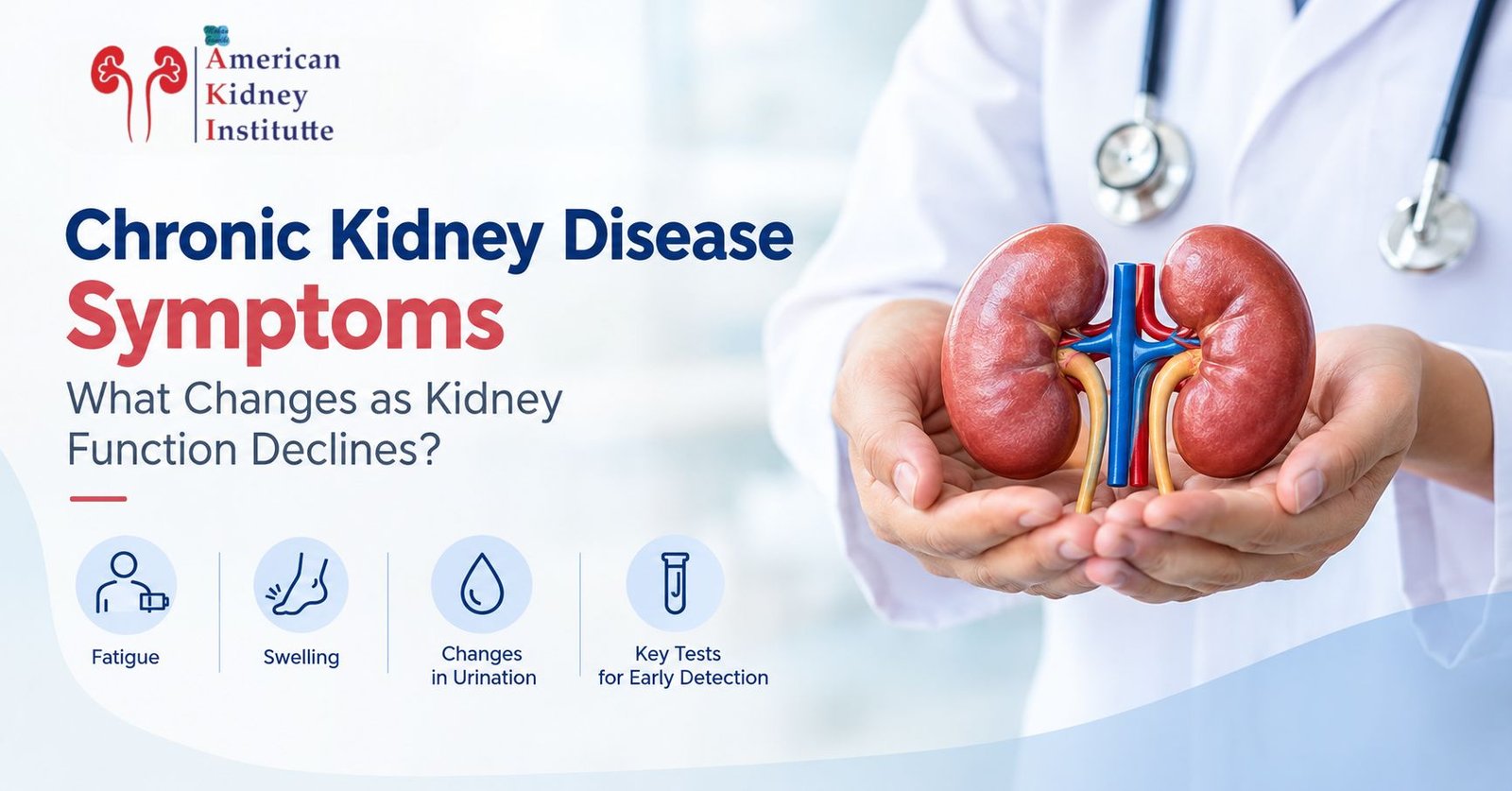
Chronic Kidney Disease Symptoms: What Changes as Kidney Function Declines?

Chronic Kidney Disease Symptoms: What Changes as Kidney Function Declines? Chronic kidney disease (CKD) is a long-term condition in which the kidneys become damaged or gradually lose their ability to filter waste and excess fluid from the blood. One of the biggest challenges with CKD is that symptoms may not appear during the early stages, even when kidney damage has already started. Recognising changes in your health, understanding your kidney test results, and seeking timely medical advice can help you manage the condition more effectively. For people looking for information about Chronic Kidney Disease Symptoms, it is important to understand that symptoms vary from person to person. Some people may notice swelling or unusual tiredness, while others may feel completely normal. Blood and urine tests are often necessary to detect kidney disease before noticeable symptoms develop. At American Kidney Institute, Bharathi Nagar, Vijayawada, individuals can seek medical evaluation for kidney-related concerns and guidance on appropriate kidney health assessments. What Is Chronic Kidney Disease? Chronic kidney disease is a condition involving persistent kidney damage or reduced kidney function over time. Healthy kidneys remove waste products, regulate fluid balance, help control blood pressure, and support the production of red blood cells When kidney function declines, these processes may become less effective. Waste products and excess fluid can build up, while changes in blood pressure, red blood cell production, and mineral balance may affect overall health CKD is generally identified when kidney damage or reduced kidney function persists for at least three months. The underlying cause and severity differ between individuals Diabetes and high blood pressure are two major risk factors. Other causes include certain inherited conditions, immune-related diseases, and previous kidney injuries Chronic Kidney Disease Symptoms: Why They Can Be Difficult to Recognise Unlike some illnesses that cause immediate discomfort, CKD can develop gradually. The kidneys may continue performing enough of their essential functions for a person to feel well during the early stages. This means the absence of symptoms does not necessarily indicate normal kidney function. As kidney function changes, a person may begin to notice persistent tiredness, swelling, changes in urination, reduced appetite, or other health concerns. However, these symptoms can also occur with conditions unrelated to CKD. Understanding the difference between a possible warning sign and a confirmed diagnosis is important. Symptoms can indicate the need for an assessment, but they cannot establish the stage or severity of kidney disease on their own. How Chronic Kidney Disease Symptoms May Change Over Time The symptoms of chronic kidney disease depend on the extent of kidney damage, the underlying cause, and whether complications have developed. 1. Early CKD: Kidney Damage Without Obvious Symptoms In the early stages, many people do not experience noticeable physical changes. They may continue their usual activities without realising that their kidney function has changed. During this stage, abnormalities may be identified through routine blood or urine tests, particularly in people with diabetes or high blood pressure. Possible findings include: Protein or albumin in the urine. An abnormal blood creatinine level. A reduced estimated glomerular filtration rate (eGFR). Other persistent abnormalities suggesting kidney damage. These findings need to be interpreted by a healthcare professional. A single abnormal result does not always confirm chronic kidney disease. 2. As Kidney Function Declines: Changes in Daily Well-Being As CKD progresses, some people begin to experience changes that affect their daily routine. Persistent fatigue and weakness: Feeling unusually tired, even after adequate rest, may occur because of anaemia or other complications associated with kidney disease. Swelling in the feet and ankles: Reduced removal of excess salt and fluid can contribute to swelling. Similar swelling can also occur with heart, liver, or other medical conditions. Changes in urination: Some people notice changes in how often they urinate, including more frequent urination at night. Others may experience reduced urine output, particularly in certain circumstances. Foamy urine: Persistent foamy urine may be associated with excess protein in the urine. However, occasional foam does not automatically indicate kidney disease. These changes should be evaluated in context rather than treated as proof of CKD. 3. Advanced CKD: Symptoms May Become More Noticeable When kidney function becomes significantly reduced, the effects of waste accumulation and other complications may become more apparent. Possible symptoms include: Nausea, vomiting, or reduced appetite. Persistent itching or dry skin. Muscle cramps. Difficulty concentrating or disturbed sleep. Unintentional weight loss. Swelling caused by fluid retention. Shortness of breath in some cases, particularly when fluid accumulates. Not everyone with advanced CKD experiences all these symptoms. Their presence and severity depend on the individual’s condition and any other health problems. Severe or rapidly worsening symptoms require prompt medical assessment. When Should You Get Tested for Chronic Kidney Disease? Waiting for symptoms is not a reliable way to identify CKD. People with an increased risk of kidney disease may need testing even when they feel healthy. Consider discussing kidney-function testing with your doctor if you have: Diabetes. High blood pressure. Heart disease. A family history of kidney failure. Previously abnormal kidney-function reports. Persistent protein in the urine. A history of conditions or injuries that may have affected your kidneys. Regular monitoring can help identify changes in kidney function and support timely medical management. Which Tests Help Detect Chronic Kidney Disease? Doctors use blood tests, urine tests, medical history, and other investigations to evaluate kidney health Blood Creatinine and eGFR Creatinine is a waste product normally filtered by the kidneys. A blood test measures creatinine, and the estimated glomerular filtration rate (eGFR) helps assess how effectively the kidneys filter blood An abnormal creatinine or eGFR result needs clinical interpretation. Doctors may review previous results or repeat testing to determine whether a change is persistent Urine Albumin Test Albumin is a protein found in the blood. Healthy kidney filters generally prevent significant amounts of albumin from passing into the urine A urine albumin-to-creatinine ratio (UACR) can help identify abnormal albumin levels, which may be an early sign of kidney damage. Blood Pressure and Other Investigations Blood pressure

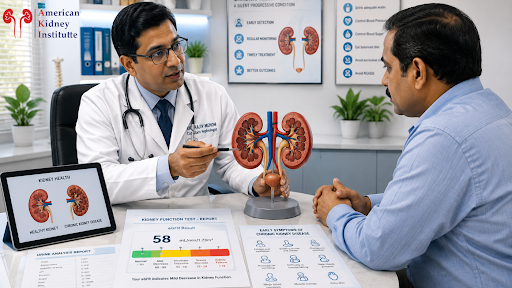
Common Chronic Kidney Disease Symptoms and Available Treatment Options

How Nephrologists Diagnose and Treat Chronic Kidney Disease Chronic kidney disease, commonly called CKD, is a long-term condition in which the kidneys become damaged or their ability to filter blood decreases over time. The condition can affect people of different ages and may develop because of diabetes, high blood pressure, inherited kidney disorders, autoimmune diseases, repeated kidney injury, and other medical conditions. One of the biggest challenges with CKD is that it can develop quietly. Many people do not experience clear symptoms during the early stages. Blood and urine tests may identify kidney damage before a person feels unwell. This is where a nephrologist plays an important role. A nephrologist is a doctor who specializes in kidney diseases. Nephrologists do more than treat advanced kidney failure. They investigate why kidney function is changing, assess the severity of kidney disease, manage complications, and create treatment plans designed to protect remaining kidney function. For people searching for the Best Nephrologist in Vijayawada, understanding how CKD is diagnosed and treated can help them recognize the importance of timely kidney care. What Is Chronic Kidney Disease? Chronic kidney disease means there is an abnormality in kidney structure or function that persists for at least three months. Healthy kidneys continuously filter the blood. They remove waste products and excess fluid through urine while helping regulate electrolytes, acid-base balance, blood pressure, and other important body functions. When kidney function becomes reduced, waste products and excess substances may gradually accumulate in the body. CKD can also lead to complications involving blood pressure, anemia, bones, minerals, heart health, and nutrition. The condition does not always progress quickly. Some people remain stable for many years, while others experience a faster decline in kidney function. This difference makes regular monitoring important. Why Can Chronic Kidney Disease Go Unnoticed? Early CKD often does not produce obvious symptoms. A person may have an abnormal kidney test while continuing to work, eat, exercise, and carry out normal daily activities. Symptoms may become more noticeable as kidney function declines. These can include swelling, tiredness, nausea, poor appetite, changes in urination, itching, muscle cramps, or shortness of breath. However, symptoms alone cannot determine whether someone has CKD. Testing is important because blood and urine tests can identify kidney damage or reduced filtration before serious symptoms develop. Who Is at Higher Risk of CKD? Certain health conditions increase the risk of developing kidney disease. People who may need regular kidney evaluation include those with: Diabetes, particularly when blood glucose has been difficult to control over time. High blood pressure, especially when it remains uncontrolled or requires multiple medicines. Heart disease or other cardiovascular conditions associated with increased kidney risk. A family history of kidney failure or certain inherited kidney diseases. Previous episodes of acute kidney injury or repeated kidney-related problems. Conditions such as autoimmune diseases that can affect the kidney’s filtering structures. NIDDK identifies diabetes, hypertension, cardiovascular disease, and family history of kidney failure among important CKD risk factors. When Should You See a Nephrologist? You may need nephrology evaluation when kidney tests are repeatedly abnormal or when kidney function is changing. Common reasons include: Persistently elevated creatinine or reduced eGFR on blood tests. Protein or albumin repeatedly detected in urine. A rapid or unexplained decline in kidney function. Blood in the urine with other kidney abnormalities. High blood pressure that remains difficult to control. Unexplained swelling or fluid retention. Repeated kidney stones, infections, or other kidney-related problems. Abnormal potassium, calcium, phosphorus, or bicarbonate levels associated with reduced kidney function. Advanced CKD where dialysis or kidney transplantation may eventually need to be considered. Early specialist evaluation does not mean dialysis is immediately required. In many cases, the purpose is to understand the problem early and protect kidney function. How Do Nephrologists Diagnose CKD? Diagnosing CKD involves several pieces of information. A nephrologist may review your medical history, symptoms, previous laboratory reports, medications, blood pressure readings, blood tests, urine tests, and imaging results. The two major markers used to identify and monitor CKD are eGFR and urine albumin. The doctor also needs to determine whether the abnormality is truly chronic. An abnormal test caused by temporary dehydration or an acute illness should not automatically be labeled as chronic kidney disease. Understanding Creatinine Creatinine is a waste product produced through normal muscle metabolism. Healthy kidneys remove creatinine from the blood. When kidney filtration decreases, blood creatinine may increase. However, creatinine is not a perfect measure of kidney function by itself. Muscle mass, age, diet, certain medicines, and other factors can affect creatinine levels. For this reason, nephrologists usually interpret creatinine alongside eGFR and other findings. A single elevated creatinine result does not automatically mean that someone has permanent CKD. What Is eGFR? The estimated glomerular filtration rate, or eGFR, estimates how efficiently the kidneys filter blood. It is calculated using blood-test information and an established estimation equation. A persistently reduced eGFR can indicate chronic kidney disease. NIDDK notes that an eGFR below 60 may indicate kidney disease, while an eGFR of 15 or lower is generally considered the kidney failure range. However, doctors do not make treatment decisions based on eGFR alone. The patient’s symptoms, urine albumin, underlying cause, rate of change, other laboratory findings, age, and overall health also matter. Why Is Urine Testing Important? Blood tests tell doctors about kidney filtration, but urine tests provide different information. One important test is the urine albumin-to-creatinine ratio, or UACR. Albumin is a protein normally found in the blood. Healthy kidneys generally prevent significant amounts of albumin from passing into urine. When the kidney’s filtering barrier is damaged, albumin can leak into urine. Persistent albuminuria can therefore be an important sign of kidney damage. A UACR above 30 mg/g may indicate increased urine albumin, although results need to be interpreted in the clinical context and may be repeated for confirmation. What Other Urine Tests May Be Done? A nephrologist may order a complete urinalysis depending on the patient’s condition. The test can provide information about: Protein: Persistent protein

Modern Hospital Infrastructure

Understanding Chronic Kidney Disease Symptoms Before It’s Too Late

Your kidneys work quietly every single day, filtering waste, balancing fluids, controlling blood pressure, producing important hormones, and keeping your body healthy. Because they perform these essential functions without causing noticeable discomfort, many people don’t realize something is wrong until significant kidney damage has already occurred. That is why learning about Chronic Kidney Disease Symptoms can make a life-changing difference. Chronic Kidney Disease (CKD) develops gradually over months or even years. In its early stages, it may not cause obvious symptoms, allowing the disease to progress silently. As kidney function decreases, waste products begin to accumulate in the blood, leading to various health problems that affect multiple organs. Recognizing these warning signs early gives you the opportunity to seek medical care before permanent kidney damage occurs. Many people assume kidney disease only affects older adults, but the reality is different. Individuals with diabetes, high blood pressure, obesity, heart disease, a family history of kidney disease, or unhealthy lifestyle habits are also at increased risk. Even younger adults can develop CKD if underlying medical conditions remain untreated for a long time. Early diagnosis plays a major role in protecting kidney function. Simple blood tests, urine tests, blood pressure monitoring, and imaging studies can help doctors identify kidney disease before severe complications develop. With proper medical guidance, lifestyle modifications, medications, and regular follow-ups, it is often possible to slow the progression of kidney disease and maintain a good quality of life. At American Kidney Institute, we believe that awareness is one of the strongest tools for preventing advanced kidney disease. Understanding how your kidneys function and knowing when to seek medical advice can help you make informed decisions that support lifelong kidney health. Why Are Healthy Kidneys So Important? Before understanding the warning signs, it is important to know why your kidneys are among the most vital organs in your body. Although each kidney is about the size of a fist, together they perform hundreds of important functions every day that keep every organ working efficiently. Healthy kidneys continuously clean your blood, remove toxins through urine, regulate electrolyte balance, maintain healthy blood pressure, support red blood cell production, strengthen bones by activating Vitamin D, and help maintain the body’s fluid balance. When kidney function begins to decline, these essential processes become less effective, eventually affecting your heart, brain, bones, muscles, and immune system. Some of the most important functions performed by healthy kidneys include: Filtering nearly 50 gallons of blood every day to remove waste products, toxins, excess water, and harmful substances before they accumulate in the body. This natural filtration system helps maintain overall health and keeps your blood chemically balanced. Maintaining the right balance of minerals such as sodium, potassium, calcium, and phosphorus. These minerals are essential for healthy muscles, nerves, heart rhythm, and proper cellular function throughout the body. Regulating blood pressure by controlling the amount of fluid in the bloodstream and releasing hormones that help keep blood pressure within a healthy range. Poor kidney function can contribute to difficult-to-control hypertension. Producing erythropoietin, a hormone that signals the bone marrow to produce healthy red blood cells. Reduced kidney function can lead to anemia, causing fatigue, weakness, and shortness of breath even during simple daily activities. When these critical functions begin to decline gradually, Chronic Kidney Disease Symptoms may appear slowly, making them easy to overlook. This is why understanding the early warning signs is essential for protecting your kidney health before irreversible damage occurs. What Is Chronic Kidney Disease? Chronic Kidney Disease (CKD) is a long-term condition in which the kidneys gradually lose their ability to filter waste products and excess fluids from the blood. Unlike sudden kidney injury, CKD develops slowly over months or years. Because the damage occurs gradually, many people continue with their daily lives without realizing that their kidneys are becoming weaker. By the time symptoms become noticeable, a significant amount of kidney function may already be lost. The severity of CKD is measured using the Glomerular Filtration Rate (GFR), which shows how well the kidneys are filtering blood. Doctors classify CKD into five stages, ranging from mild kidney damage to complete kidney failure. Early diagnosis during the first few stages offers the best opportunity to slow disease progression through medication, dietary changes, blood pressure control, and healthy lifestyle habits. One of the biggest challenges with CKD is that the disease is often called a “silent disease.” Many people do not experience pain or discomfort during the early stages. Instead, the kidneys continue losing function quietly until waste products begin accumulating in the bloodstream. This is why routine health check-ups become extremely important, especially for people with diabetes, high blood pressure, or a family history of kidney disease. At American Kidney Institute, specialists focus on identifying kidney disease as early as possible through advanced diagnostic testing and personalized treatment plans. Early medical intervention can significantly reduce the risk of complications and help patients maintain better kidney function for many years. What Causes Chronic Kidney Disease? Chronic Kidney Disease does not develop overnight. In most cases, it is the result of long-term medical conditions or lifestyle factors that slowly damage the kidneys over time. Understanding these causes can help you take preventive steps before serious complications occur. Some of the most common causes include: Diabetes: High blood sugar levels over many years can damage the tiny blood vessels inside the kidneys, reducing their ability to filter waste efficiently. Diabetes remains one of the leading causes of kidney disease worldwide. High Blood Pressure: Uncontrolled hypertension places continuous pressure on the delicate blood vessels in the kidneys. Over time, this damage reduces kidney function and increases the risk of kidney failure. Family History of Kidney Disease: People with close relatives who have kidney disease may have a higher risk of developing similar kidney problems and should undergo regular kidney health screenings. Obesity and Unhealthy Lifestyle Habits: Excess body weight, smoking, lack of physical activity, excessive salt intake, and poor dietary habits increase the workload on the kidneys

Translate »