- 0 Comments
- KIDNEY CARE, KIDNEY STONES, NEPHROLOGY
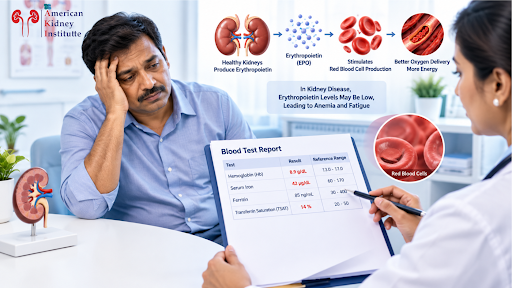
Why Is Erythropoietin Low in Kidney Disease and How Is It Treated? Feeling tired or weak is a common complaint among people living with kidney disease. Some patients may feel exhausted even after getting enough sleep, while others may notice weakness, reduced energy, poor concentration, or difficulty doing their usual daily activities. Many people may think that this tiredness is simply due to age, stress, lack of sleep, or the kidney disease itself. However, anemia is one of the important reasons for fatigue in people with chronic kidney disease. One of the major causes of anemia in kidney disease is a reduction in the production of a hormone called erythropoietin, also known as EPO. Healthy kidneys normally produce erythropoietin, which signals the bone marrow to make red blood cells. When kidney function decreases significantly, the kidneys may not produce enough erythropoietin. As a result, the bone marrow receives less stimulation to produce red blood cells, which can contribute to anemia. However, low erythropoietin is not the only reason kidney patients develop anemia. Iron deficiency, inflammation, blood loss, nutritional problems, and other medical conditions can also contribute. Understanding the connection between kidney disease, erythropoietin, hemoglobin, iron, and fatigue can help patients seek the right evaluation and treatment instead of simply accepting constant tiredness as a normal part of aging. What Is Erythropoietin? Erythropoietin is a hormone that plays an important role in red blood cell production. Most erythropoietin in adults is produced by specialized cells in the kidneys. When the body senses that tissues are not receiving enough oxygen, the kidneys normally increase erythropoietin production. Erythropoietin then travels through the bloodstream to the bone marrow. It stimulates the bone marrow to produce more red blood cells. Red blood cells contain hemoglobin, a protein that carries oxygen from the lungs to different parts of the body. Therefore, erythropoietin, red blood cells, hemoglobin, and oxygen delivery are closely connected. When kidney function becomes severely reduced, the kidneys may lose some of their ability to produce an adequate amount of erythropoietin. This can reduce red blood cell production and contribute to anemia. Why Does Erythropoietin Become Low in Kidney Disease? Healthy kidneys have several important functions, including filtering waste products, regulating fluid and electrolyte balance, and producing hormones. As chronic kidney disease progresses, damage to the kidney tissue can affect these functions. The cells responsible for producing erythropoietin can become less effective. Consequently, erythropoietin production may not increase adequately even when the body needs more red blood cells. This is one reason anemia becomes increasingly common as kidney disease advances. The relationship is not always simple. Some patients with kidney disease may have anemia even when erythropoietin levels are not extremely low because their bone marrow may not respond normally to erythropoietin. Inflammation, iron deficiency, infection, nutritional deficiencies, and blood loss can also interfere with healthy red blood cell production. Therefore, doctors do not usually diagnose the cause of anemia simply by looking at erythropoietin levels. A complete evaluation is needed. How Does Low Erythropoietin Cause Anemia? The process can be understood in a simple way. The kidneys produce erythropoietin, and erythropoietin tells the bone marrow to produce red blood cells. When kidney disease reduces this signal, the bone marrow may produce fewer red blood cells. With fewer red blood cells, the amount of oxygen carried to body tissues can decrease. This can result in symptoms such as tiredness, weakness, reduced stamina, dizziness, headaches, shortness of breath during activity, and difficulty concentrating. The severity of symptoms can vary considerably from one person to another. A patient with a mildly reduced hemoglobin level may have few symptoms, while another patient with more significant anemia may feel extremely tired and weak. Is Tiredness Always Due to Low Erythropoietin? No. This is an important point for kidney patients to understand. Fatigue can have many causes, and kidney disease itself can contribute to reduced energy. Anemia is one important cause, but it is not the only possible explanation. A patient may have iron deficiency, vitamin deficiencies, infection, inflammation, poor nutrition, sleep problems, heart disease, thyroid problems, medication-related effects, or other conditions that cause fatigue. For this reason, patients should not assume that every episode of tiredness means they need an erythropoietin injection. A doctor needs to identify the underlying cause before deciding on treatment. What Are the Common Symptoms of Anemia in Kidney Disease? Anemia can develop gradually, so some patients may not immediately recognize the symptoms. The body may adapt to a gradual reduction in red blood cells, and symptoms may become more noticeable as anemia becomes more severe. Common symptoms can include: Persistent tiredness and weakness that interfere with normal daily activities. A patient may feel exhausted after routine activities such as walking, climbing stairs, household work, or shopping. Shortness of breath, especially during physical activity. When oxygen delivery is reduced, the heart and lungs may need to work harder to meet the body’s oxygen requirements. Dizziness, headaches, or light-headedness. These symptoms can occur in some people with anemia, although they may also have other causes. Reduced concentration and difficulty feeling mentally alert. Some patients describe this as feeling mentally tired or unable to focus properly. Pale skin or pale appearance. Reduced hemoglobin can sometimes make the skin, lips, or inside of the eyelids appear paler than usual. Reduced exercise tolerance. Activities that were previously easy may become tiring, particularly when anemia becomes more significant. These symptoms should not automatically be attributed to kidney disease or age. Medical evaluation can help identify whether anemia or another condition is responsible. Understanding Chronic Kidney Disease Symptoms and Anemia Many patients search for Chronic Kidney Disease Symptoms when they begin experiencing fatigue, weakness, swelling, changes in urination, or other health problems. However, chronic kidney disease can sometimes progress without obvious symptoms during its early stages. As kidney function declines, symptoms may become more noticeable. Anemia is one of the complications that may develop as kidney disease progresses. Because fatigue has many possible causes, checking hemoglobin and iron-related blood