- 0 Comments
- KIDNEY CARE, KIDNEY STONES, NEPHROLOGY
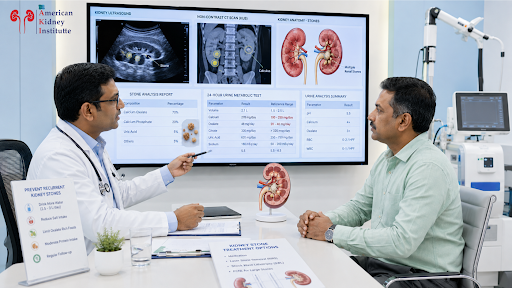
Kidney Stone Treatment in Vijayawada: Causes, Diagnosis, Treatment and Prevention What Are Kidney Stones? Kidney stones are hard deposits that develop when certain minerals and salts become highly concentrated in urine and form crystals. Over time, these crystals can join together and grow into stones. Some stones remain inside the kidney without causing any symptoms. Others may move from the kidney into the ureter, the narrow tube that carries urine toward the bladder. When a stone gets stuck and blocks urine flow, it can cause sudden and severe pain. The size, location and composition of a stone can vary from person to person. Because of this, treatment is not the same for every patient. Small stones may sometimes pass naturally, while larger stones or stones causing obstruction, infection or persistent pain may need a procedure. For people searching for Kidney Stone Treatment in Vijayawada, understanding the cause and characteristics of the stone is an important first step toward choosing an appropriate treatment plan. Why Do Kidney Stones Form? Kidney stones usually develop when urine contains high concentrations of substances that can form crystals. These may include calcium, oxalate, uric acid and other minerals. Not drinking enough fluids can make urine more concentrated, increasing the opportunity for crystals to form. Dietary habits, family history, certain medical conditions, medications and previous kidney stones can also influence the risk. Having one stone does not necessarily mean another stone will never develop. People who have experienced kidney stones may have a higher risk of recurrence, which makes prevention an important part of long-term care. The exact cause should ideally be evaluated rather than assuming that dehydration alone is responsible. What Are the Common Symptoms of Kidney Stones? A kidney stone may remain silent for a long time. Symptoms often appear when the stone moves into the ureter or obstructs the urinary tract. The pain caused by a moving stone can be intense and may come in waves. It may start in the side or back and move toward the lower abdomen or groin. Common symptoms can include: Sharp pain in the back, side, lower abdomen or groin that may come and go as the stone moves through the urinary tract. Burning or pain while urinating, particularly when the stone is closer to the bladder or urethra. Blood in the urine, which can make urine appear pink, red, brown or darker than usual. Nausea and vomiting, especially when the pain is severe or the urinary tract is obstructed. Frequent or urgent urination when the stone is located in the lower part of the urinary tract. Fever or chills, which can be especially concerning when they occur with an obstructed urinary system. Not every person experiences all these symptoms. Some stones are discovered accidentally during imaging performed for another medical reason. When Should You See a Doctor for Kidney Stone Pain? Severe pain from a kidney stone should not always be managed at home. Medical assessment becomes particularly important when pain is severe, persistent or associated with urinary symptoms. Fever and chills are especially important warning signs because an infected and obstructed urinary tract can become a medical emergency. The European Association of Urology identifies an obstructed kidney with signs of urinary tract infection or no urine output as a urological emergency requiring urgent management. Other concerning symptoms include very little or no urine, repeated vomiting, worsening weakness or significant blood in the urine. Early assessment can help determine whether the stone can be monitored or requires active treatment. How Are Kidney Stones Diagnosed? Before deciding on treatment, doctors need to understand where the stone is located, how large it is and whether it is causing obstruction. The evaluation may include a detailed medical history, physical examination, urine testing, blood tests and imaging. Urine Tests Urine testing can help identify blood, signs of infection and other abnormalities. If an infection is suspected, additional testing may be performed to identify bacteria and guide appropriate treatment. Blood Tests Blood tests may be used to assess kidney function and check certain substances that may contribute to stone formation. Depending on the patient’s history, the doctor may also evaluate calcium, uric acid and other metabolic factors. Ultrasound Ultrasound can help identify many kidney stones and may also show swelling of the urinary system caused by obstruction. It does not use ionizing radiation and can be particularly useful in certain patients. CT Scan A non-contrast CT scan may provide detailed information about the size and location of urinary stones and can help identify obstruction. The choice of imaging depends on the patient’s symptoms, age, medical history and clinical situation. American Kidney Institute lists renal imaging, including ultrasound and other imaging approaches, among the diagnostic tools used in its kidney and urinary care services. Kidney Stone Treatment in Vijayawada: How Is the Treatment Decided? There is no single procedure that is suitable for every kidney stone. The treatment plan depends on several factors, including: Stone size: Smaller stones have a greater chance of passing naturally than larger stones. Stone location: A stone in the kidney may be managed differently from one lodged in the ureter. Symptoms: Severe or persistent pain can influence the decision to actively remove a stone. Urinary obstruction: A blocked urinary tract may require intervention, particularly when kidney function is affected. Infection: An infected obstructed kidney requires urgent medical attention and drainage before definitive stone treatment in many cases. Stone composition: Different types of stones respond differently to medications and procedures. Overall health: Other medical conditions and medications can influence which treatment is safest. The European Association of Urology recommends considering factors such as stone growth, obstruction, infection, symptoms and other patient-specific factors when deciding whether renal stones require active removal. Can Small Kidney Stones Pass Naturally? Yes, some small stones can pass through the urinary tract without a procedure. If the stone is small, the symptoms are manageable, there is no significant obstruction or infection, and the patient’s condition is otherwise stable, a doctor may recommend observation