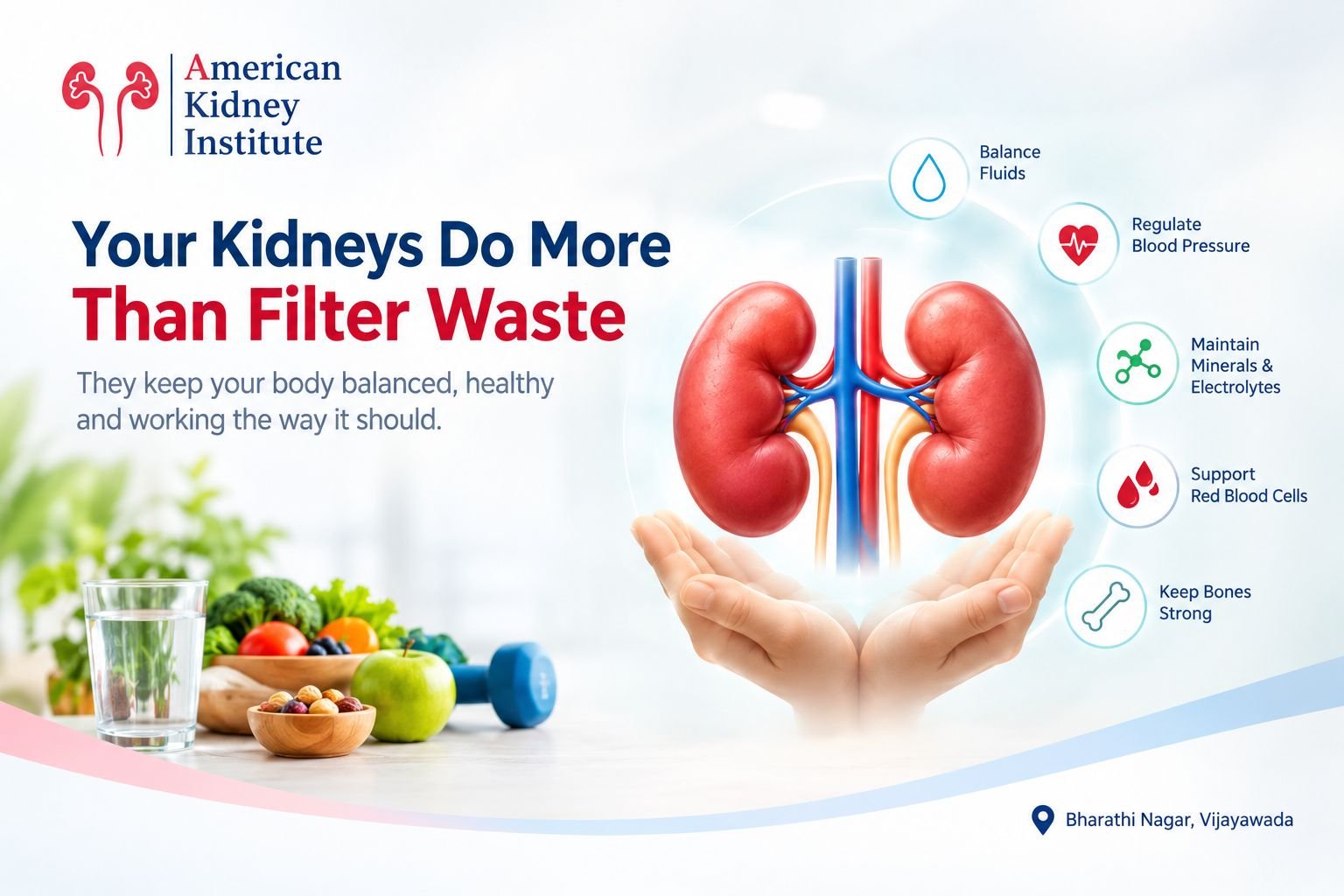
Beyond Waste Filtration: What Your Kidneys Do and Why Kidney Health Matters

Beyond Waste Filtration: What Your Kidneys Do and Why Kidney Health Matters Your kidneys do much more than filter waste from your blood. They help maintain fluid balance, regulate blood pressure, control important minerals, support red blood cell production, and contribute to healthy bones. When kidney function is affected, these essential processes can become disrupted, sometimes before noticeable symptoms appear Understanding how your kidneys work, which everyday habits may affect them, and when to seek medical advice can help you make informed decisions about your health At American Kidney Institute in Bharathi Nagar, Vijayawada, patients can seek professional guidance for kidney-related concerns through the hospital’s nephrology services What Do Your Kidneys Do Besides Filtering Waste? The kidneys are two bean-shaped organs located on either side of the spine, below the rib cage. They continuously filter the blood, remove waste products and excess substances, and help maintain the body’s internal balance However, waste removal is only one part of their function 1. Maintain the Body’s Fluid Balance Your kidneys regulate how much water your body retains and how much leaves through urine. This helps maintain an appropriate balance of fluids When kidney function declines, the body may retain excess fluid, potentially causing swelling in the feet, ankles, hands or face. In more serious cases, fluid accumulation can contribute to breathing difficulties Fluid balance is especially important for people with chronic kidney disease or those receiving dialysis, who may need individualized fluid recommendations 2. Help Regulate Blood Pressure The kidneys play an important role in controlling blood pressure by regulating sodium, fluid levels and hormones involved in blood vessel function   The relationship works both ways. Persistently high blood pressure can damage the small blood vessels inside the kidneys, while kidney disease can make blood pressure more difficult to control This is why people with hypertension should discuss appropriate kidney function monitoring with their healthcare professional 3. Balance Essential Minerals and Electrolytes Your body needs minerals such as sodium, potassium and phosphorus to support normal nerve, muscle, heart and bone function Healthy kidneys help maintain appropriate levels of these substances by adjusting how much is retained or removed When kidney function is impaired, certain minerals may accumulate in the blood. Abnormal potassium levels, for example, can affect the heart’s electrical activity and may become dangerous People with kidney disease may require regular blood tests and dietary adjustments based on their individual results 4. Support Red Blood Cell Production The kidneys produce a hormone called erythropoietin, which signals the bone marrow to make red blood cells When kidney function is significantly reduced, the body may produce less erythropoietin. This can contribute to anaemia, a condition in which the blood has insufficient healthy red blood cells or haemoglobin People with kidney-related anaemia may experience fatigue, weakness, reduced stamina, dizziness or breathlessness. However, these symptoms have several possible causes and require proper medical assessment 5. Contribute to Healthy Bones The kidneys help activate vitamin D, which supports calcium absorption and bone health. They also help regulate phosphorus levels When kidney disease progresses, disruptions in these processes can affect bone strength and mineral balance. These complications may require monitoring and treatment as part of a comprehensive kidney care plan How Can Kidney Problems Affect the Rest of Your Body? Because the kidneys perform several essential functions, kidney disease can affect more than the urinary system Depending on the underlying condition and severity, reduced kidney function may contribute to: Fluid retention: Swelling around the feet, ankles or face. Blood pressure changes: Difficulty controlling hypertension. Electrolyte imbalances: Changes in potassium or other mineral levels. Anaemia: Persistent tiredness, weakness or reduced exercise tolerance. Bone and mineral disorders: Problems involving calcium, phosphorus and bone health. Waste accumulation: A buildup of substances that the kidneys would normally remove. Not everyone with kidney disease develops these complications. The effects depend on the cause, stage and rate of progression of the condition Which Everyday Habits Can Put Kidney Health at Risk? Certain lifestyle patterns can increase the risk of kidney problems, particularly when combined with diabetes, high blood pressure, obesity or existing kidney disease Excessive Salt and Highly Processed Foods Frequently eating foods high in sodium can contribute to high blood pressure and make fluid management more difficult for some people with kidney disease Packaged snacks, processed meats, instant foods, fast food and heavily salted meals can contain substantial amounts of sodium Choosing fresh foods more often and checking nutrition labels can help reduce excessive salt intake. People who already have kidney disease should follow dietary recommendations suited to their medical condition Frequent Consumption of Sugary Drinks and Unbalanced Meals Regularly consuming large quantities of sugar-sweetened beverages and calorie-dense foods may contribute to weight gain, insulin resistance and type 2 diabetes Diabetes is a major risk factor for chronic kidney disease because persistently high blood glucose can damage the kidneys’ filtering structures over time Balanced meals, appropriate portion sizes and good blood glucose management can help reduce these risks Smoking and Tobacco Use Smoking damages blood vessels and increases cardiovascular risk. Because the kidneys depend on a healthy blood supply, smoking can contribute to a higher risk of kidney damage and may worsen existing kidney disease Avoiding tobacco is an important part of protecting overall cardiovascular and kidney health Excessive Alcohol Consumption Heavy alcohol consumption can contribute to high blood pressure and other health problems that may indirectly affect kidney health. Alcohol can also interfere with hydration and may interact with certain medicines Avoiding excessive consumption and discussing alcohol use with a healthcare professional can help you make safer choices, especially if you have an existing medical condition Taking Painkillers or Supplements Without Medical Advice Some medicines, including nonsteroidal anti-inflammatory drugs (NSAIDs), can harm kidney function in certain circumstances. The risk may be higher during dehydration or in people with existing kidney disease Some herbal products and supplements may also contain substances that affect the kidneys or interact with prescribed medicines Do not stop prescribed medication on your own. Instead, ask your

Everyday Habits That Affect Kidney Health: Why Regular Kidney Checkups Matter

Everyday Habits That Affect Kidney Health: Why Regular Kidney Checkups Matter Your kidneys work around the clock to keep your body healthy. They filter waste products from the blood, remove excess fluid, balance essential minerals and help regulate blood pressure. Despite performing these important functions every day, kidney health is often overlooked until a medical problem becomes noticeable One of the biggest challenges with kidney disease is that it can develop without obvious symptoms during its early stages. A person may feel completely healthy even when kidney function has started to decline. This is why understanding everyday habits, recognizing personal risk factors and getting the right medical tests are important parts of kidney care If you are wondering how to protect your kidneys, the answer begins with informed daily choices and timely health assessments. At American Kidney Institute in Bharathi Nagar, Vijayawada, patients can seek medical guidance for kidney-related concerns through its nephrology services Why Do Your Kidneys Need Daily Care? The kidneys do much more than produce urine. They help maintain the body’s internal balance by performing several essential functions. Filtering waste: They remove waste products and excess substances from the blood. Maintaining fluid balance: They regulate the amount of water retained or removed by the body. Balancing minerals: They help control electrolytes such as sodium and potassium. Supporting blood pressure regulation: They participate in mechanisms that control blood pressure. Supporting red blood cell production: They produce a hormone that signals the body to make red blood cells. Maintaining bone health: They help regulate minerals and activate vitamin D. When kidney function is affected, these processes may become less effective. Long-term kidney damage can also increase the risk of complications involving the heart, bones, blood and other parts of the body. Everyday Habits That May Affect Kidney Health Some daily routines may seem harmless but can increase kidney-related risks, particularly when combined with existing health conditions. Understanding these habits can help you make better decisions. 1. Taking Painkillers Without Proper Medical Advice Certain pain-relieving medicines, particularly nonsteroidal anti-inflammatory drugs (NSAIDs), can reduce blood flow to the kidneys and contribute to kidney injury in some situations. The risk may be higher in people with chronic kidney disease, dehydration, heart failure or other medical conditions. Taking these medicines frequently or for prolonged periods without medical guidance can be risky. What you can do: Consult a healthcare professional before using painkillers regularly, especially if you have diabetes, high blood pressure or a history of kidney problems. Do not stop prescribed medicines without discussing them with your doctor. 2. Consuming Too Much Salt A diet high in sodium can contribute to high blood pressure. Over time, uncontrolled blood pressure can damage the small blood vessels that help the kidneys filter blood. Packaged snacks, pickles, papads, instant foods, processed meats and restaurant meals can contain considerable amounts of sodium. What you can do: Reduce excess salt, check food labels and choose fresh, balanced meals more often. If you have kidney disease, follow an individualized dietary plan recommended by your healthcare professional. 3. Drinking Too Little Water for Your Needs Your body needs adequate fluid to maintain normal function. Significant dehydration can reduce blood flow to the kidneys and, in some cases, cause acute kidney injury. It can also increase the risk of certain kidney stones. However, drinking excessive amounts of water does not automatically improve kidney function. What you can do: Drink fluids according to your activity level, weather and individual medical needs. People with advanced kidney disease, heart failure or a prescribed fluid restriction should follow their doctor’s advice rather than forcing themselves to drink more water. 4. Ignoring Diabetes and High Blood Pressure Diabetes and high blood pressure are two major risk factors for chronic kidney disease. Persistently high blood glucose can damage the kidney’s filtering structures, while uncontrolled blood pressure can strain the blood vessels inside the kidneys. These changes may progress without causing noticeable discomfort. What you can do: Monitor blood glucose and blood pressure as advised, attend regular medical appointments and take prescribed medicines consistently. If you have diabetes or hypertension, ask your doctor whether routine kidney function testing is appropriate. 5. Depending on Unverified Supplements or Herbal Remedies Some supplements and herbal products may contain ingredients that can affect kidney function, interact with prescribed medicines or contain undeclared substances. A product being marketed as natural does not automatically make it safe. The risk can be greater for people who already have reduced kidney function. What you can do: Inform your doctor about all supplements, traditional remedies and over-the-counter products you use. Seek medical advice before starting a new product, particularly if you have an existing kidney condition. 6. Following Extreme Diets Without Medical Guidance Very restrictive diets, inappropriate protein intake and certain weight-loss practices may not be suitable for everyone. Their effects depend on a person’s overall health, nutritional status and kidney function. People with established kidney disease may need specific adjustments to protein, sodium, potassium, phosphorus or fluid intake. What you can do: Choose a balanced diet and avoid extreme dietary changes without professional guidance. A dietitian experienced in kidney care can help you understand which dietary adjustments are appropriate for your condition. Why Kidney Damage Can Go Unnoticed Kidney disease does not always cause pain or obvious physical changes in its early stages. The kidneys can continue performing some of their functions even when damage has begun. This means that feeling healthy is not a reliable way to confirm that your kidneys are functioning normally. Some people may later develop swelling, changes in urination, unusual tiredness or other symptoms. However, these symptoms are not specific to kidney disease, and their absence does not rule it out. For this reason, people with known risk factors should discuss appropriate screening with their healthcare professional instead of waiting for symptoms to appear. Which Tests Can Help Detect Kidney Problems Early? Kidney function tests help doctors assess how well the kidneys are working and whether there is evidence of

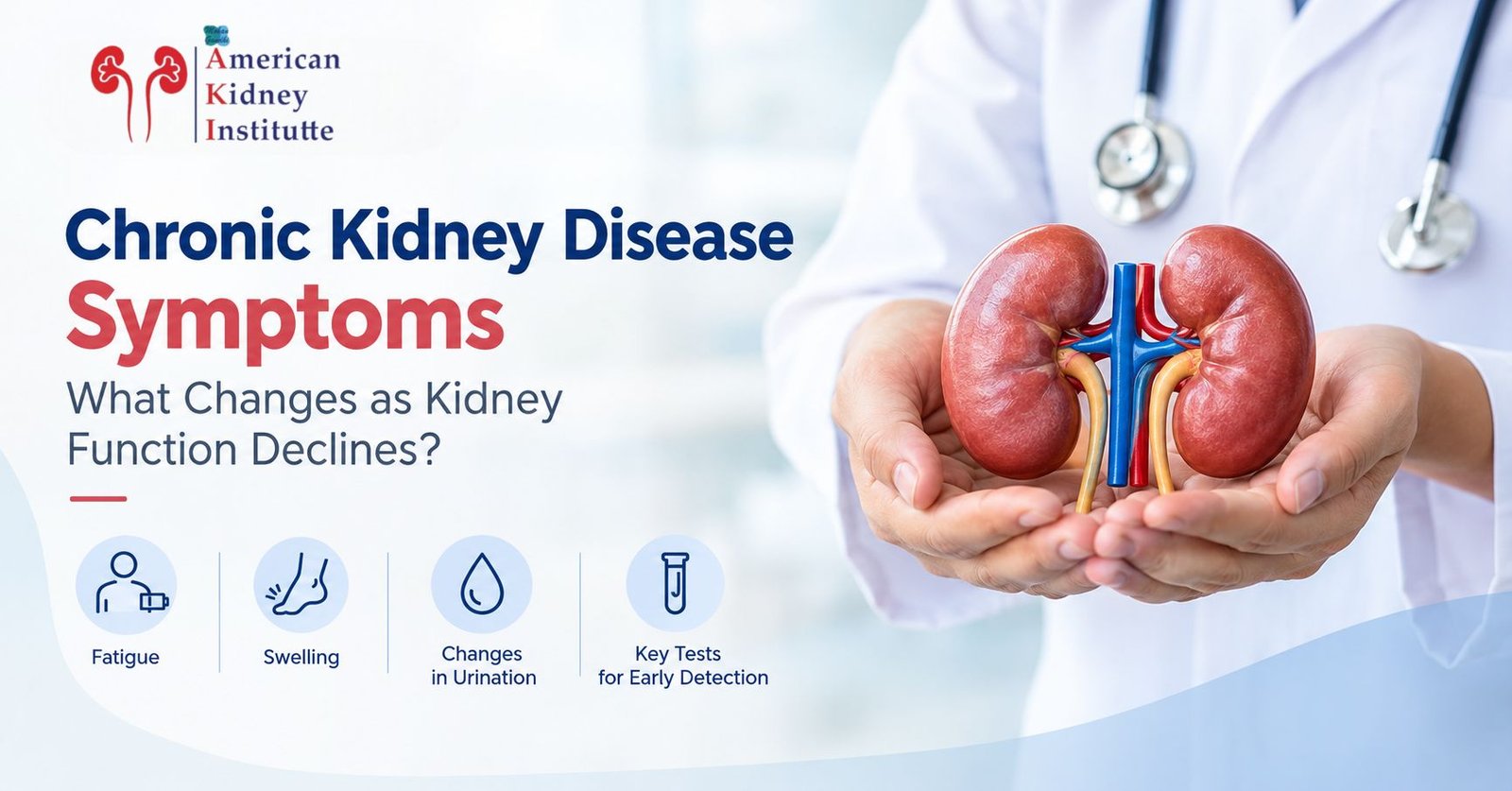
Chronic Kidney Disease Symptoms: What Changes as Kidney Function Declines?

Chronic Kidney Disease Symptoms: What Changes as Kidney Function Declines? Chronic kidney disease (CKD) is a long-term condition in which the kidneys become damaged or gradually lose their ability to filter waste and excess fluid from the blood. One of the biggest challenges with CKD is that symptoms may not appear during the early stages, even when kidney damage has already started. Recognising changes in your health, understanding your kidney test results, and seeking timely medical advice can help you manage the condition more effectively. For people looking for information about Chronic Kidney Disease Symptoms, it is important to understand that symptoms vary from person to person. Some people may notice swelling or unusual tiredness, while others may feel completely normal. Blood and urine tests are often necessary to detect kidney disease before noticeable symptoms develop. At American Kidney Institute, Bharathi Nagar, Vijayawada, individuals can seek medical evaluation for kidney-related concerns and guidance on appropriate kidney health assessments. What Is Chronic Kidney Disease? Chronic kidney disease is a condition involving persistent kidney damage or reduced kidney function over time. Healthy kidneys remove waste products, regulate fluid balance, help control blood pressure, and support the production of red blood cells When kidney function declines, these processes may become less effective. Waste products and excess fluid can build up, while changes in blood pressure, red blood cell production, and mineral balance may affect overall health CKD is generally identified when kidney damage or reduced kidney function persists for at least three months. The underlying cause and severity differ between individuals Diabetes and high blood pressure are two major risk factors. Other causes include certain inherited conditions, immune-related diseases, and previous kidney injuries Chronic Kidney Disease Symptoms: Why They Can Be Difficult to Recognise Unlike some illnesses that cause immediate discomfort, CKD can develop gradually. The kidneys may continue performing enough of their essential functions for a person to feel well during the early stages. This means the absence of symptoms does not necessarily indicate normal kidney function. As kidney function changes, a person may begin to notice persistent tiredness, swelling, changes in urination, reduced appetite, or other health concerns. However, these symptoms can also occur with conditions unrelated to CKD. Understanding the difference between a possible warning sign and a confirmed diagnosis is important. Symptoms can indicate the need for an assessment, but they cannot establish the stage or severity of kidney disease on their own. How Chronic Kidney Disease Symptoms May Change Over Time The symptoms of chronic kidney disease depend on the extent of kidney damage, the underlying cause, and whether complications have developed. 1. Early CKD: Kidney Damage Without Obvious Symptoms In the early stages, many people do not experience noticeable physical changes. They may continue their usual activities without realising that their kidney function has changed. During this stage, abnormalities may be identified through routine blood or urine tests, particularly in people with diabetes or high blood pressure. Possible findings include: Protein or albumin in the urine. An abnormal blood creatinine level. A reduced estimated glomerular filtration rate (eGFR). Other persistent abnormalities suggesting kidney damage. These findings need to be interpreted by a healthcare professional. A single abnormal result does not always confirm chronic kidney disease. 2. As Kidney Function Declines: Changes in Daily Well-Being As CKD progresses, some people begin to experience changes that affect their daily routine. Persistent fatigue and weakness: Feeling unusually tired, even after adequate rest, may occur because of anaemia or other complications associated with kidney disease. Swelling in the feet and ankles: Reduced removal of excess salt and fluid can contribute to swelling. Similar swelling can also occur with heart, liver, or other medical conditions. Changes in urination: Some people notice changes in how often they urinate, including more frequent urination at night. Others may experience reduced urine output, particularly in certain circumstances. Foamy urine: Persistent foamy urine may be associated with excess protein in the urine. However, occasional foam does not automatically indicate kidney disease. These changes should be evaluated in context rather than treated as proof of CKD. 3. Advanced CKD: Symptoms May Become More Noticeable When kidney function becomes significantly reduced, the effects of waste accumulation and other complications may become more apparent. Possible symptoms include: Nausea, vomiting, or reduced appetite. Persistent itching or dry skin. Muscle cramps. Difficulty concentrating or disturbed sleep. Unintentional weight loss. Swelling caused by fluid retention. Shortness of breath in some cases, particularly when fluid accumulates. Not everyone with advanced CKD experiences all these symptoms. Their presence and severity depend on the individual’s condition and any other health problems. Severe or rapidly worsening symptoms require prompt medical assessment. When Should You Get Tested for Chronic Kidney Disease? Waiting for symptoms is not a reliable way to identify CKD. People with an increased risk of kidney disease may need testing even when they feel healthy. Consider discussing kidney-function testing with your doctor if you have: Diabetes. High blood pressure. Heart disease. A family history of kidney failure. Previously abnormal kidney-function reports. Persistent protein in the urine. A history of conditions or injuries that may have affected your kidneys. Regular monitoring can help identify changes in kidney function and support timely medical management. Which Tests Help Detect Chronic Kidney Disease? Doctors use blood tests, urine tests, medical history, and other investigations to evaluate kidney health Blood Creatinine and eGFR Creatinine is a waste product normally filtered by the kidneys. A blood test measures creatinine, and the estimated glomerular filtration rate (eGFR) helps assess how effectively the kidneys filter blood An abnormal creatinine or eGFR result needs clinical interpretation. Doctors may review previous results or repeat testing to determine whether a change is persistent Urine Albumin Test Albumin is a protein found in the blood. Healthy kidney filters generally prevent significant amounts of albumin from passing into the urine A urine albumin-to-creatinine ratio (UACR) can help identify abnormal albumin levels, which may be an early sign of kidney damage. Blood Pressure and Other Investigations Blood pressure

Translate »