Understanding Nephrotic Syndrome and Nephritic Syndrome in Glomerulonephritis

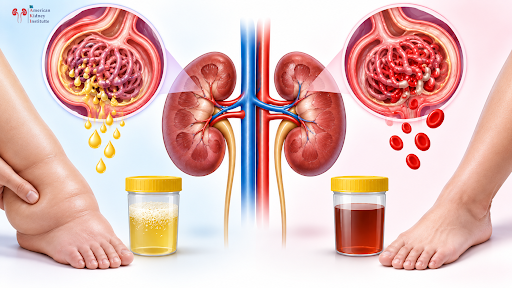
Understanding Nephrotic Syndrome and Nephritic Syndrome in Glomerulonephritis The kidneys play an important role in maintaining the body’s overall health. They filter the blood, remove waste products, balance fluids and electrolytes, and help control blood pressure. Tiny structures called glomeruli perform much of this filtering work. When the glomeruli become inflamed or damaged, a condition called glomerulonephritis can develop. Depending on the type and severity of glomerular damage, a person may develop different patterns of kidney problems. Two important clinical patterns are nephrotic syndrome and nephritic syndrome. Although both can occur due to glomerular disease, they do not present in exactly the same way. Nephrotic syndrome is mainly associated with heavy protein loss through the urine, low blood albumin levels, and significant swelling. Nephritic syndrome is more commonly associated with blood in the urine, inflammation of the glomeruli, reduced kidney function, and high blood pressure. Understanding the difference between these two patterns can help people recognize warning signs and seek appropriate medical evaluation at the right time. What Is Glomerulonephritis? Glomerulonephritis refers to inflammation or damage involving the glomeruli, which are tiny blood-filtering units inside the kidneys. Healthy glomeruli allow water and small waste products to pass into the urine while keeping important substances such as blood cells and most proteins inside the bloodstream. When the glomerular filtering barrier becomes damaged, its normal function can change. Protein may start leaking into the urine, blood cells may enter the urine, and the kidneys may become less effective at removing waste. The clinical symptoms depend on the specific type of glomerular disease. Some people may have mild changes detected only through urine or blood tests. Others may develop noticeable swelling, dark or reddish urine, reduced urine output, or increased blood pressure. Glomerulonephritis can occur suddenly or develop gradually. Some forms are temporary, while others can progress and cause chronic kidney disease if the underlying cause is not identified and managed appropriately. What Is Nephrotic Syndrome? Nephrotic syndrome is a group of symptoms and laboratory findings that occur when the glomeruli allow an unusually large amount of protein to pass into the urine. One of the most important features is heavy proteinuria. Proteinuria means the presence of excess protein in the urine. Albumin is an important protein in the blood. It helps maintain the normal movement of fluid between blood vessels and body tissues. When large quantities of albumin are lost through the urine, the blood albumin level can fall. This condition is known as hypoalbuminemia. As albumin decreases and the body’s fluid balance changes, fluid can move into surrounding tissues. This can result in swelling called edema. In severe cases, swelling can become widespread throughout the body. This severe generalized swelling may be described as anasarca. Common Features of Nephrotic Syndrome The main features may include: Heavy protein loss in urine: Large amounts of protein can pass through damaged glomeruli, resulting in significant proteinuria that can be detected through urine testing. Foamy or frothy urine: Excess protein in urine may make the urine appear unusually foamy, although foamy urine can also occur for other reasons. Low blood albumin: Continuous urinary protein loss can reduce the albumin concentration in the bloodstream. Swelling of the body: Edema may first become noticeable around the eyes, feet, ankles, or legs and may become more widespread. Weight gain from fluid retention: A sudden increase in body weight can sometimes result from accumulation of excess fluid rather than an increase in body fat. Increased risk of infections and blood clots: Some forms of nephrotic syndrome can increase the risk of complications, making medical monitoring important. Why Does Nephrotic Syndrome Cause Swelling? Swelling is one of the most noticeable symptoms of nephrotic syndrome. The kidneys may lose large amounts of protein through the urine. Albumin is particularly important because it helps maintain oncotic pressure within blood vessels. When blood albumin becomes significantly low, fluid can move more easily from blood vessels into surrounding tissues. The kidneys may also retain more sodium and water as the body attempts to restore circulating fluid volume. This can further increase swelling. The result may be edema in the legs, feet, face, abdomen, or other parts of the body. In severe cases, fluid accumulation may become widespread and cause anasarca. What Is Nephritic Syndrome? Nephritic syndrome is another clinical pattern associated with glomerular inflammation and damage. Unlike nephrotic syndrome, where heavy protein loss is the major feature, nephritic syndrome is commonly characterized by hematuria, reduced kidney filtration, and increased blood pressure. Hematuria means blood is present in the urine. When red blood cells pass through inflamed glomeruli, the urine may become pink, red, brown, or cola-colored. However, blood in urine is not always visible to the naked eye. Sometimes it can only be detected through urine microscopy or other laboratory testing. Inflammation within the glomeruli can also reduce the kidney’s ability to filter blood efficiently. As kidney filtration decreases, waste products can accumulate in the bloodstream. Fluid and sodium retention may also contribute to high blood pressure. Common Features of Nephritic Syndrome The symptoms and findings may include: Hematuria: Blood may leak through damaged glomeruli and appear in the urine as microscopic or visible blood. Dark or cola-colored urine: Significant blood in the urine can change its appearance, although urine color alone cannot confirm the cause. High blood pressure: Reduced kidney filtration and fluid retention can contribute to elevated blood pressure. Reduced urine output: Some people may produce less urine when kidney filtration is significantly affected. Mild to moderate edema: Swelling can occur, but it is often less prominent than the widespread edema seen in severe nephrotic syndrome. Reduced kidney function: Blood tests may show an increase in creatinine when the kidneys are not filtering normally. Nephrotic Syndrome vs Nephritic Syndrome Although both conditions involve the glomeruli, their typical clinical patterns are different. Nephrotic Syndrome The dominant problem is heavy protein leakage. Patients may notice: Foamy urine Significant proteinuria Low albumin levels Swelling around the eyes Swelling of the legs and feet Generalized


Signs of Kidney Transplant Rejection and When to Seek Medical Care

Signs of Kidney Transplant Rejection and When to Seek Medical Care   A kidney transplant can give people with kidney failure an opportunity to live without regular dialysis and enjoy greater freedom in their daily lives. But receiving a donor kidney is not the end of kidney care. It is the beginning of a long-term journey that requires regular monitoring, medicines, healthy habits, and close communication with the transplant team. One of the most important complications to understand after transplantation is kidney transplant rejection. Rejection happens when the body’s immune system recognizes the transplanted kidney as something foreign and begins to attack it. Anti-rejection medicines, also called immunosuppressants, are prescribed to reduce this immune response and protect the transplanted kidney. The important thing to remember is that rejection does not always cause obvious symptoms in the beginning. In many cases, changes are first identified through routine blood tests before a patient feels unwell. This is why regular follow-up appointments and blood tests are essential after a transplant. Knowing the possible warning signs can help patients seek medical attention quickly. Early assessment and treatment can sometimes prevent further damage to the transplanted kidney. What Is Kidney Transplant Rejection? Kidney transplant rejection occurs when the recipient’s immune system reacts against the donated kidney. The immune system is designed to recognize and attack substances that it considers foreign. Because a transplanted kidney comes from another person, the immune system may identify the kidney as different from the body’s own tissues. Anti-rejection medicines reduce this immune response. However, rejection can still occur even when a patient is taking medicines correctly. Rejection does not automatically mean that the transplant has failed. Many episodes of rejection can be treated, particularly when they are detected early. Treatment depends on the type and severity of rejection and may involve adjusting immunosuppressive medicines or using additional treatments. Why Can Kidney Rejection Happen After Transplantation? The immune system remains active after transplant surgery. Even though the donor and recipient undergo compatibility testing, the immune system can still recognize differences between the recipient’s body and the transplanted kidney. The risk of rejection is influenced by several factors. One important factor is how closely the donor kidney and recipient match. Blood type, tissue typing, antibodies, and crossmatch testing are used when evaluating compatibility. These tests help the transplant team understand the risk of immune reactions. Another important factor is medication adherence. Anti-rejection medicines need to be taken exactly as prescribed. Missing doses, changing doses without medical advice, or stopping medicines because the patient feels well can increase the risk of rejection. Some medicines and health conditions can also affect the level or effectiveness of immunosuppressive treatment. This is why regular blood tests and medication reviews are important. What Are the Early Signs of Kidney Transplant Rejection? One of the most important facts about transplant rejection is that there may be no obvious symptoms at first. Routine blood tests can detect that the transplanted kidney is not filtering waste as well as expected. A rise in creatinine or other changes in kidney function may lead the transplant team to investigate further. When symptoms do occur, they can include changes in urine output, swelling, weight gain, fever, tiredness, high blood pressure, or pain around the area of the transplanted kidney. These symptoms do not always mean rejection. Infection, medication side effects, dehydration, urinary problems, and other complications can cause similar symptoms. That is why patients should not try to diagnose rejection on their own. Important warning signs include: A noticeable decrease in urine output: Producing much less urine than usual or urinating less frequently can be a warning sign that the transplanted kidney is not functioning normally. Swelling in the body: Swelling around the ankles, legs, feet, hands, or face may occur when the body retains excess fluid. Unexpected weight gain: A sudden increase in weight over a short period may indicate fluid retention rather than normal changes in body weight. Fever or feeling unusually unwell: Fever can occur with rejection, but it can also indicate infection, which is particularly important in people taking immunosuppressive medicines. Pain or tenderness near the transplanted kidney: Some patients may experience discomfort or tenderness around the area where the transplanted kidney was placed. Increasing blood pressure: Changes in blood pressure can occur when the transplanted kidney is not functioning properly. Increasing creatinine on blood tests: A rise in creatinine may be one of the earliest clues that the transplanted kidney needs further evaluation. These signs should not be ignored. A transplant patient should contact the transplant team promptly if they develop concerning changes. Why Can Rejection Be Difficult to Notice? Kidney transplant rejection is sometimes called a “silent” problem because it may develop without clear symptoms. A person may feel completely normal while blood tests show that kidney function has changed. This is why feeling well does not mean that follow-up appointments are unnecessary. After transplantation, regular blood tests help the medical team monitor creatinine, kidney function, medicine levels, and other important health measurements. These tests can identify changes earlier than symptoms alone. Patients should therefore treat scheduled appointments as an important part of protecting their transplanted kidney. What Does Creatinine Tell Us After a Kidney Transplant? Creatinine is a waste product that is normally removed from the blood by the kidneys. After a kidney transplant, blood creatinine levels are monitored to understand how well the new kidney is functioning. If creatinine rises unexpectedly, the transplant team may investigate possible causes. Rejection is one possibility, but it is not the only one. Dehydration, infection, urinary obstruction, medication-related kidney injury, and other conditions can also affect kidney function. For this reason, a single elevated creatinine result does not automatically mean transplant rejection. Doctors consider the patient’s previous results, symptoms, medication levels, hydration status, urine output, and other investigations before deciding what is happening. What Happens If Kidney Transplant Rejection Is Suspected? If rejection is suspected, the medical team first evaluates the patient carefully. Blood tests may be repeated

Chronic Kidney Disease Care

When Should You Consider a Kidney Transplant in Vijayawada

Introduction Your kidneys work every minute of the day to keep your body healthy. They remove waste products, maintain the balance of fluids, regulate blood pressure, produce hormones that support red blood cell formation, and help keep your bones strong. When the kidneys stop working properly, these essential functions become difficult, leading to serious health complications that affect almost every organ in the body. Many people with kidney disease continue to live normal lives through medications, dietary changes, and regular medical follow-ups. However, there comes a stage where these treatments are no longer enough. At that point, doctors may recommend a kidney transplant as the most effective long-term treatment for suitable patients. Understanding the right time to consider a Kidney Transplant in Vijayawada can help patients make informed decisions before complications become severe. Early evaluation provides better treatment options, improves overall health, and increases the chances of a successful transplant. At American Kidney Institute, every patient receives personalized care based on their medical condition, overall health, and long-term treatment goals. The focus is not only on replacing a failed kidney but also on helping patients regain a healthier and more active life. Understanding the Role of Your Kidneys Your kidneys are two bean-shaped organs located on either side of your spine, just below the rib cage. Although small in size, they perform several important tasks that are necessary for survival. Healthy kidneys continuously filter your blood and remove toxins through urine while maintaining the correct balance of minerals and fluids in your body. When kidney function declines gradually, waste products begin to accumulate in the bloodstream. This buildup affects multiple body systems and causes symptoms that become more noticeable as kidney disease progresses. Some of the important functions performed by healthy kidneys include: Filtering nearly 50 gallons of blood every day by removing harmful waste products while keeping essential nutrients in the body. This continuous filtration process is necessary to maintain overall health and prevent toxins from accumulating in the bloodstream. Maintaining the body’s fluid balance by regulating the amount of water and electrolytes such as sodium, potassium, and calcium. These minerals play a vital role in muscle function, heart rhythm, and nerve communication. Producing hormones that help control blood pressure, stimulate red blood cell production, and maintain healthy bones. Without these hormones, patients may develop anemia, uncontrolled hypertension, and weakened bones. Removing excess medications and harmful substances from the body while supporting the body’s natural chemical balance. This process helps every organ function efficiently throughout the day. When these functions begin to fail, the body cannot compensate for long, making timely medical care extremely important. What Is Kidney Failure? Kidney failure occurs when the kidneys lose most of their ability to filter waste and excess fluid from the blood. Doctors usually diagnose kidney failure when kidney function drops to around 15% or less of normal capacity. This condition is also called End-Stage Kidney Disease (ESKD) or End-Stage Renal Disease (ESRD). Kidney failure may develop gradually over several years because of chronic kidney disease or occur suddenly due to severe illness, infections, or injury. Chronic kidney disease is far more common and often progresses silently without obvious symptoms during its early stages. Once kidney failure develops, patients generally require either dialysis or a kidney transplant to survive. Common Causes of Kidney Failure Several medical conditions can permanently damage the kidneys over time. Understanding these causes helps people take preventive measures and seek treatment before irreversible damage occurs. Diabetes Diabetes is one of the leading causes of kidney failure worldwide. High blood sugar damages the tiny blood vessels inside the kidneys, reducing their ability to filter waste efficiently. Proper diabetes management significantly lowers the risk of kidney damage. High Blood Pressure Uncontrolled blood pressure places constant stress on kidney blood vessels. Over time, this damage reduces kidney function and may eventually lead to kidney failure if left untreated. Chronic Glomerulonephritis This condition involves inflammation of the kidney’s filtering units called glomeruli. Persistent inflammation gradually destroys healthy kidney tissue and reduces overall kidney function. Polycystic Kidney Disease This inherited disorder causes multiple fluid-filled cysts to grow inside the kidneys. As these cysts enlarge, they replace healthy kidney tissue and interfere with normal kidney function. Recurrent Kidney Infections Frequent kidney infections can leave permanent scars that gradually reduce the kidneys’ filtering ability over several years. Autoimmune Diseases Conditions such as lupus may cause the immune system to attack healthy kidney tissue, leading to chronic inflammation and progressive kidney damage. Signs That Your Kidneys May Be Failing Kidney disease often develops slowly, and many patients notice symptoms only after significant kidney damage has already occurred. Recognizing these warning signs early allows treatment to begin before complications become severe. Common symptoms include: Persistent tiredness and weakness that continue even after adequate rest because damaged kidneys cannot remove toxins effectively, leading to fatigue and reduced energy throughout the day. Swelling in the feet, ankles, legs, hands, or face due to fluid retention. As kidney function decreases, the body struggles to remove excess water, causing noticeable swelling. Changes in urination such as producing less urine, passing urine more frequently at night, foamy urine, blood in the urine, or difficulty urinating. These changes often indicate that the kidneys are no longer filtering properly. Loss of appetite, nausea, vomiting, and an unpleasant metallic taste in the mouth caused by the buildup of waste products in the bloodstream. Shortness of breath resulting from fluid accumulation in the lungs or anemia caused by reduced production of red blood cells. Difficulty concentrating, poor memory, and confusion because toxins that should normally be removed by the kidneys begin affecting brain function. Persistent itching across different parts of the body due to waste accumulation and mineral imbalance. These symptoms should never be ignored, especially by individuals with diabetes, hypertension, or a family history of kidney disease. When Should You Consider a Kidney Transplant? Many people believe a kidney transplant should only be considered after years of dialysis. In reality, doctors often recommend transplant

Translate »