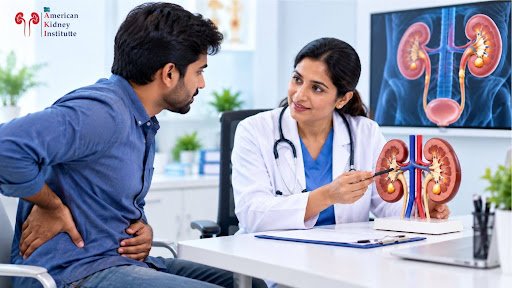
Kidney Stone Treatment in Vijayawada: Causes, Diagnosis, Treatment and Prevention
What Are Kidney Stones?
Kidney stones are hard deposits that develop when certain minerals and salts become highly concentrated in urine and form crystals. Over time, these crystals can join together and grow into stones.
Some stones remain inside the kidney without causing any symptoms. Others may move from the kidney into the ureter, the narrow tube that carries urine toward the bladder. When a stone gets stuck and blocks urine flow, it can cause sudden and severe pain.
The size, location and composition of a stone can vary from person to person. Because of this, treatment is not the same for every patient. Small stones may sometimes pass naturally, while larger stones or stones causing obstruction, infection or persistent pain may need a procedure.
For people searching for Kidney Stone Treatment in Vijayawada, understanding the cause and characteristics of the stone is an important first step toward choosing an appropriate treatment plan.
Why Do Kidney Stones Form?
Kidney stones usually develop when urine contains high concentrations of substances that can form crystals. These may include calcium, oxalate, uric acid and other minerals.
Not drinking enough fluids can make urine more concentrated, increasing the opportunity for crystals to form. Dietary habits, family history, certain medical conditions, medications and previous kidney stones can also influence the risk.
Having one stone does not necessarily mean another stone will never develop. People who have experienced kidney stones may have a higher risk of recurrence, which makes prevention an important part of long-term care.
The exact cause should ideally be evaluated rather than assuming that dehydration alone is responsible.
What Are the Common Symptoms of Kidney Stones?
A kidney stone may remain silent for a long time. Symptoms often appear when the stone moves into the ureter or obstructs the urinary tract.
The pain caused by a moving stone can be intense and may come in waves. It may start in the side or back and move toward the lower abdomen or groin.
Common symptoms can include:
- Sharp pain in the back, side, lower abdomen or groin that may come and go as the stone moves through the urinary tract.
- Burning or pain while urinating, particularly when the stone is closer to the bladder or urethra.
- Blood in the urine, which can make urine appear pink, red, brown or darker than usual.
- Nausea and vomiting, especially when the pain is severe or the urinary tract is obstructed.
- Frequent or urgent urination when the stone is located in the lower part of the urinary tract.
- Fever or chills, which can be especially concerning when they occur with an obstructed urinary system.
Not every person experiences all these symptoms. Some stones are discovered accidentally during imaging performed for another medical reason.
When Should You See a Doctor for Kidney Stone Pain?
Severe pain from a kidney stone should not always be managed at home. Medical assessment becomes particularly important when pain is severe, persistent or associated with urinary symptoms.
Fever and chills are especially important warning signs because an infected and obstructed urinary tract can become a medical emergency. The European Association of Urology identifies an obstructed kidney with signs of urinary tract infection or no urine output as a urological emergency requiring urgent management.
Other concerning symptoms include very little or no urine, repeated vomiting, worsening weakness or significant blood in the urine.
Early assessment can help determine whether the stone can be monitored or requires active treatment.
How Are Kidney Stones Diagnosed?
Before deciding on treatment, doctors need to understand where the stone is located, how large it is and whether it is causing obstruction.
The evaluation may include a detailed medical history, physical examination, urine testing, blood tests and imaging.
Urine Tests
Urine testing can help identify blood, signs of infection and other abnormalities.
If an infection is suspected, additional testing may be performed to identify bacteria and guide appropriate treatment.
Blood Tests
Blood tests may be used to assess kidney function and check certain substances that may contribute to stone formation.
Depending on the patient’s history, the doctor may also evaluate calcium, uric acid and other metabolic factors.
Ultrasound
Ultrasound can help identify many kidney stones and may also show swelling of the urinary system caused by obstruction.
It does not use ionizing radiation and can be particularly useful in certain patients.
CT Scan
A non-contrast CT scan may provide detailed information about the size and location of urinary stones and can help identify obstruction.
The choice of imaging depends on the patient’s symptoms, age, medical history and clinical situation.
American Kidney Institute lists renal imaging, including ultrasound and other imaging approaches, among the diagnostic tools used in its kidney and urinary care services.
Kidney Stone Treatment in Vijayawada: How Is the Treatment Decided?
There is no single procedure that is suitable for every kidney stone.
The treatment plan depends on several factors, including:
- Stone size: Smaller stones have a greater chance of passing naturally than larger stones.
- Stone location: A stone in the kidney may be managed differently from one lodged in the ureter.
- Symptoms: Severe or persistent pain can influence the decision to actively remove a stone.
- Urinary obstruction: A blocked urinary tract may require intervention, particularly when kidney function is affected.
- Infection: An infected obstructed kidney requires urgent medical attention and drainage before definitive stone treatment in many cases.
- Stone composition: Different types of stones respond differently to medications and procedures.
- Overall health: Other medical conditions and medications can influence which treatment is safest.
The European Association of Urology recommends considering factors such as stone growth, obstruction, infection, symptoms and other patient-specific factors when deciding whether renal stones require active removal.
Can Small Kidney Stones Pass Naturally?
Yes, some small stones can pass through the urinary tract without a procedure.
If the stone is small, the symptoms are manageable, there is no significant obstruction or infection, and the patient’s condition is otherwise stable, a doctor may recommend observation with appropriate follow-up.
Pain management and other supportive treatment may be prescribed depending on the individual situation.
However, patients should not assume that every stone will pass naturally. Stone size, location and other clinical factors influence the likelihood of spontaneous passage.
Follow-up is important to confirm that the stone has passed and that there is no ongoing obstruction.
Medicines for Kidney Stones
Some patients may be managed initially with medication, depending on the size and location of the stone.
Pain medicines may be used to control renal colic. The European Association of Urology recommends non-steroidal anti-inflammatory drugs as the first choice for renal colic when appropriate, while considering cardiovascular risks and other contraindications.
In selected patients with ureteral stones, doctors may prescribe medicines that help facilitate stone passage. Alpha-blockers are one option considered for certain distal ureteral stones, particularly those larger than 5 mm, according to the EAU guideline.
These medicines should only be used under medical supervision because they are not appropriate for every patient.
Kidney Stone Treatment in Vijayawada: ESWL or Shock Wave Lithotripsy
Extracorporeal Shock Wave Lithotripsy (ESWL or SWL) uses externally generated shock waves to break a kidney stone into smaller fragments.
The smaller fragments can then pass through the urinary tract.
ESWL is a non-invasive treatment because the doctor does not need to make an incision to reach the stone. However, its effectiveness depends on factors such as stone size, location, composition, body habitus and the ability to accurately target the stone.
Some patients may require more than one treatment session.
ESWL is not automatically the right choice for every stone. The urologist evaluates imaging and other patient-specific factors before recommending it.
What Happens During ESWL?
The patient is positioned so that the stone can be accurately targeted.
Shock waves are directed toward the stone, causing it to break into smaller pieces.
Pain control or anesthesia may be used depending on the treatment setting and patient requirements.
After treatment, the fragments may pass naturally through the urine.
Patients may experience some discomfort or blood in the urine after the procedure. The treating team provides specific instructions regarding recovery and follow-up.
Kidney Stone Treatment in Vijayawada: Ureteroscopy and Laser Treatment
Ureteroscopy is a minimally invasive procedure used to diagnose and treat stones in the ureter and kidney.
A thin scope called a ureteroscope is passed through the natural urinary passage to reach the stone. Once the stone is located, it can be removed using specialized instruments or broken into smaller fragments.
Laser energy can be used during ureteroscopy to fragment the stone.
The EAU guideline recommends holmium:YAG or thulium fiber laser lithotripsy for flexible ureteroscopy.
Depending on the situation, a temporary ureteral stent may be placed after the procedure to help urine flow while the urinary tract heals.
Whether a stent is required depends on the procedure and the patient’s individual circumstances.
What Is PCNL?
Percutaneous Nephrolithotomy (PCNL) is a procedure generally used for larger or complex kidney stones.
A small access tract is created through the skin into the kidney. A specialized instrument is passed through this tract to locate and remove or fragment the stone.
PCNL is particularly important for larger renal stones. The EAU describes percutaneous nephrolithotomy as the standard procedure for large renal calculi.
Because PCNL is more invasive than ESWL, the decision depends on stone size, location, anatomy, stone burden and the patient’s overall health.
How Do Doctors Choose Between ESWL, Ureteroscopy and PCNL?
The decision is based on the complete clinical picture rather than simply choosing the newest or most advanced procedure.
For example, a small stone in a favorable location may be monitored or treated with ESWL depending on the circumstances.
A ureteral stone that is unlikely to pass or is causing persistent symptoms may be treated with ureteroscopy.
Large or complex kidney stones may require PCNL.
The EAU guideline notes that treatment selection depends on stone size, location, anatomy and other patient-related factors.
Therefore, two people with kidney stones of similar size may still receive different treatment recommendations.
What Happens If a Kidney Stone Causes an Infection?
A stone that blocks urine flow while an infection is present can be dangerous.
An infected obstructed urinary system requires urgent medical attention. The immediate priority may be to drain the blocked urinary system and treat the infection rather than attempting definitive stone removal immediately.
The EAU specifically identifies an obstructed kidney with urinary tract infection and/or anuria as a urological emergency and recommends urgent decompression.
Drainage may be achieved using a ureteral stent or nephrostomy depending on the clinical situation.
Definitive stone treatment can then be planned after the infection has been appropriately managed.
Kidney Stone Treatment in Vijayawada at American Kidney Institute
American Kidney Institute provides nephrology and urology services in Vijayawada and states that its urology department manages kidney stones using medical and surgical approaches, including minimally invasive procedures.
Its published information describes kidney stone care as including evaluation, diagnosis and treatment planning based on the patient’s condition.
The appropriate treatment for an individual patient should be determined by the treating urologist after reviewing symptoms, imaging, laboratory results, stone characteristics and other relevant health factors.
The institute’s published hospital information lists its location in Bharathi Nagar, Vijayawada, and describes its services as available around the clock.
How Can Kidney Stones Be Prevented From Coming Back?
Removing a stone solves the immediate problem, but prevention is important because stones can recur.
The prevention strategy depends partly on the type of stone and the reason it formed.
Adequate fluid intake is commonly an important part of prevention because producing more urine can reduce the concentration of stone-forming substances.
However, people with kidney failure, heart failure or other conditions affecting fluid balance should follow individualized fluid recommendations rather than simply increasing water intake.
Dietary Changes for Kidney Stone Prevention
Dietary recommendations depend on the type of stone.
Reducing excessive sodium intake can be helpful because high sodium intake can increase urinary calcium in some people.
Adequate dietary calcium is also important. Completely avoiding calcium without medical advice is not generally recommended because dietary calcium has an important role in nutrition and may influence oxalate absorption.
People with calcium oxalate stones may also need guidance about foods high in oxalate.
Those with uric acid stones may receive different dietary and medical advice.
Therefore, a generic “kidney stone diet” is not suitable for everyone.
Why Is Stone Analysis Important?
If a stone is passed naturally or removed during a procedure, the doctor may recommend sending it for laboratory analysis.
Knowing the stone composition can provide information about why it formed.
For example, calcium-based stones, uric acid stones, struvite stones and cystine stones have different underlying factors and prevention strategies.
NIDDK notes that healthcare professionals may send a passed or removed stone to a laboratory to determine its type.
This information can make future prevention more targeted.
What Is a 24-Hour Urine Test?
People who have recurrent stones may benefit from a more detailed metabolic evaluation.
A 24-hour urine collection can measure the amount of urine produced and levels of certain minerals and substances associated with stone formation.
NIDDK notes that healthcare professionals may use a 24-hour urine collection after a stone has passed or been removed to assess urine volume and mineral levels.
The results can help doctors identify factors that increase the risk of recurrence.
Does Holding Urine Cause Kidney Stones?
Holding urine for long periods is not usually considered a direct cause of kidney stones.
However, maintaining healthy urinary habits is still important.
Kidney stones primarily form because of factors such as urine concentration, mineral levels, stone composition, dietary factors, medical conditions and genetics.
People experiencing frequent urinary symptoms should not assume that holding urine is the sole cause. A medical evaluation can help identify the actual reason.
Can Drinking More Water Prevent Kidney Stones?
Adequate hydration can help reduce the concentration of substances that form crystals in urine.
However, the ideal amount varies between people. Climate, physical activity, body size, medical conditions and previous stone history can influence fluid requirements.
Instead of following a fixed amount from social media, patients should discuss their individual fluid target with their doctor.
Those who already have significant kidney or heart disease may require specific fluid restrictions.
Can Kidney Stones Damage the Kidneys?
A small stone that passes without obstruction may not cause lasting kidney damage.
However, prolonged urinary obstruction, repeated infections, severe complications or untreated obstruction can affect kidney function.
This is why persistent pain, reduced urine output, fever or other warning signs should not be ignored.
Early diagnosis can help doctors identify obstruction and determine whether intervention is necessary.
Recovery After Kidney Stone Treatment
Recovery depends on the treatment used.
After ESWL, stone fragments may need time to pass. Some discomfort or blood in the urine can occur.
After ureteroscopy, patients may experience urinary symptoms, especially if a temporary stent has been placed.
PCNL generally requires more recovery than less invasive procedures because access is made through the skin into the kidney.
The treating doctor will provide specific instructions regarding activity, medicines, hydration, follow-up imaging and warning signs.
Why Follow-Up Matters After Stone Removal
A procedure may remove the current stone, but it does not automatically eliminate the factors that caused it.
Residual fragments may remain in some cases, and new stones can develop later.
Follow-up imaging can help determine whether the urinary tract is clear.
For people with recurrent stones, metabolic evaluation, stone analysis and dietary or medication changes may be appropriate.
The long-term goal is not only to remove the present stone but also to reduce the likelihood of future episodes.
When Is Kidney Stone Treatment an Emergency?
Seek urgent medical care if kidney stone symptoms are accompanied by:
- Fever or chills, especially with severe flank or abdominal pain, because an infected obstruction can become a urological emergency.
- Very little or no urine, particularly when there is known or suspected urinary obstruction.
- Severe pain that does not improve with prescribed pain management.
- Repeated vomiting prevents adequate fluid intake and may lead to dehydration.
- Severe weakness, confusion or other concerning changes in general health.
These symptoms should not be managed only with home remedies.
Frequently Asked Questions
1. What is the best treatment for kidney stones?
There is no single treatment that is best for every kidney stone.
Treatment depends on the stone’s size, location, composition, symptoms, obstruction and the patient’s overall health.
Options may include observation, medicines, ESWL, ureteroscopy with laser treatment or PCNL.
2. How much does Kidney Stone Treatment in Vijayawada cost?
The cost can vary significantly depending on the treatment required, stone size and location, investigations, hospital stay, procedure and individual medical needs.
ESWL, ureteroscopy and PCNL involve different resources and therefore may have different costs.
A hospital can provide a more accurate estimate after evaluating the patient.
3. Can kidney stones pass without surgery?
Yes, some smaller stones can pass naturally without a procedure.
The possibility depends on the stone’s size, location and the absence of complications such as infection or significant obstruction.
Medical follow-up is important to confirm that the stone has passed safely.
4. Is laser treatment used for kidney stones?
Yes, laser lithotripsy can be performed during ureteroscopy to break kidney or ureteral stones into smaller fragments.
A thin scope is passed through the urinary tract to reach the stone, so no external incision is usually needed for the ureteroscopic approach.
The appropriate technique depends on the stone and the patient’s condition.
5. What is ESWL for kidney stones?
ESWL, or shock wave lithotripsy, uses externally generated shock waves to break a kidney stone into smaller pieces.
The fragments can then pass through the urinary tract.
Its effectiveness depends on factors such as stone size, location, composition and patient anatomy.
6. Is PCNL used for large kidney stones?
PCNL is commonly used for large or complex kidney stones.
The procedure accesses the kidney through a small tract made through the skin and allows the stone to be removed or fragmented.
The EAU identifies PCNL as the standard procedure for large renal calculi.
7. Can kidney stones come back after treatment?
Yes, kidney stones can recur even after successful stone removal.
The risk can be influenced by hydration, diet, genetics, medical conditions, medications and the type of previous stone.
Stone analysis and metabolic evaluation can help develop a more individualized prevention strategy.
8. Can drinking water prevent kidney stones?
Adequate fluid intake can help by producing more dilute urine and reducing the concentration of substances that can form crystals.
However, fluid needs vary between individuals and may be restricted in some people with kidney or heart conditions.
A doctor can recommend an appropriate fluid target based on the person’s health.
9. When should I seek Kidney Stone Treatment in Vijayawada?
You should seek medical evaluation when you have severe or persistent flank pain, blood in urine, repeated vomiting, urinary difficulty or other symptoms suggestive of a stone.
Fever or chills with suspected obstruction require urgent medical attention.
Early assessment can help determine whether observation, medication or a procedure is appropriate.
10. Can kidney stones affect kidney function?
A stone that causes prolonged obstruction can affect kidney function, particularly when associated with infection or other complications.
Not every stone causes kidney damage, and many small stones pass without lasting problems.
Persistent symptoms or reduced urine output should be medically evaluated.
11. What foods should be avoided after kidney stones?
The appropriate diet depends on the type of stone and the individual’s metabolic risk factors.
Reducing excessive sodium is often useful, while calcium and oxalate recommendations may need to be individualized.
A doctor or renal dietitian can provide dietary advice based on stone analysis and urine testing.
12. How can I prevent kidney stones from returning?
Adequate hydration, appropriate dietary changes and treatment of underlying metabolic factors can help reduce recurrence risk.
For people with repeated stones, stone analysis and 24-hour urine testing may identify specific risk factors.
Long-term prevention should be individualized rather than based on a generic diet plan.
Conclusion
Kidney stones can range from small stones that pass naturally to larger or obstructing stones that require active treatment. The right approach depends on the individual patient rather than the stone alone.
For someone looking for Kidney Stone Treatment in Vijayawada, the first step is an accurate evaluation of the stone’s size, location and clinical impact. Depending on the situation, treatment may include observation, medicines, ESWL, ureteroscopy with laser lithotripsy or PCNL.
A stone accompanied by fever, chills or significant urinary obstruction requires particularly urgent attention because an infected obstructed urinary system can become a medical emergency.
Treatment should also look beyond immediate stone removal. Understanding why the stone formed, analyzing its composition when possible, assessing recurrent-stone risk and making appropriate dietary and lifestyle changes can help reduce future episodes.
American Kidney Institute’s published services include nephrology and urology care and specifically describe kidney stone management among its urological services.
If you are experiencing severe flank or back pain, blood in the urine, burning urination, vomiting, fever or difficulty passing urine, medical evaluation is important rather than relying only on home remedies.