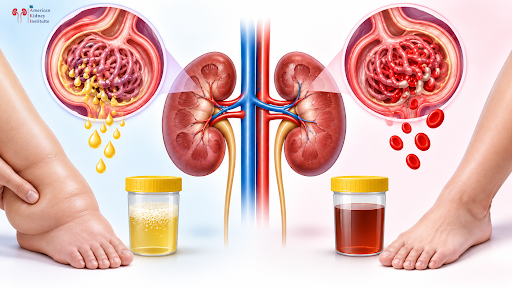
Understanding Nephrotic Syndrome and Nephritic Syndrome in Glomerulonephritis

Understanding Nephrotic Syndrome and Nephritic Syndrome in Glomerulonephritis The kidneys play an important role in maintaining the body’s overall health. They filter the blood, remove waste products, balance fluids and electrolytes, and help control blood pressure. Tiny structures called glomeruli perform much of this filtering work. When the glomeruli become inflamed or damaged, a condition called glomerulonephritis can develop. Depending on the type and severity of glomerular damage, a person may develop different patterns of kidney problems. Two important clinical patterns are nephrotic syndrome and nephritic syndrome. Although both can occur due to glomerular disease, they do not present in exactly the same way. Nephrotic syndrome is mainly associated with heavy protein loss through the urine, low blood albumin levels, and significant swelling. Nephritic syndrome is more commonly associated with blood in the urine, inflammation of the glomeruli, reduced kidney function, and high blood pressure. Understanding the difference between these two patterns can help people recognize warning signs and seek appropriate medical evaluation at the right time. What Is Glomerulonephritis? Glomerulonephritis refers to inflammation or damage involving the glomeruli, which are tiny blood-filtering units inside the kidneys. Healthy glomeruli allow water and small waste products to pass into the urine while keeping important substances such as blood cells and most proteins inside the bloodstream. When the glomerular filtering barrier becomes damaged, its normal function can change. Protein may start leaking into the urine, blood cells may enter the urine, and the kidneys may become less effective at removing waste. The clinical symptoms depend on the specific type of glomerular disease. Some people may have mild changes detected only through urine or blood tests. Others may develop noticeable swelling, dark or reddish urine, reduced urine output, or increased blood pressure. Glomerulonephritis can occur suddenly or develop gradually. Some forms are temporary, while others can progress and cause chronic kidney disease if the underlying cause is not identified and managed appropriately. What Is Nephrotic Syndrome? Nephrotic syndrome is a group of symptoms and laboratory findings that occur when the glomeruli allow an unusually large amount of protein to pass into the urine. One of the most important features is heavy proteinuria. Proteinuria means the presence of excess protein in the urine. Albumin is an important protein in the blood. It helps maintain the normal movement of fluid between blood vessels and body tissues. When large quantities of albumin are lost through the urine, the blood albumin level can fall. This condition is known as hypoalbuminemia. As albumin decreases and the body’s fluid balance changes, fluid can move into surrounding tissues. This can result in swelling called edema. In severe cases, swelling can become widespread throughout the body. This severe generalized swelling may be described as anasarca. Common Features of Nephrotic Syndrome The main features may include: Heavy protein loss in urine: Large amounts of protein can pass through damaged glomeruli, resulting in significant proteinuria that can be detected through urine testing. Foamy or frothy urine: Excess protein in urine may make the urine appear unusually foamy, although foamy urine can also occur for other reasons. Low blood albumin: Continuous urinary protein loss can reduce the albumin concentration in the bloodstream. Swelling of the body: Edema may first become noticeable around the eyes, feet, ankles, or legs and may become more widespread. Weight gain from fluid retention: A sudden increase in body weight can sometimes result from accumulation of excess fluid rather than an increase in body fat. Increased risk of infections and blood clots: Some forms of nephrotic syndrome can increase the risk of complications, making medical monitoring important. Why Does Nephrotic Syndrome Cause Swelling? Swelling is one of the most noticeable symptoms of nephrotic syndrome. The kidneys may lose large amounts of protein through the urine. Albumin is particularly important because it helps maintain oncotic pressure within blood vessels. When blood albumin becomes significantly low, fluid can move more easily from blood vessels into surrounding tissues. The kidneys may also retain more sodium and water as the body attempts to restore circulating fluid volume. This can further increase swelling. The result may be edema in the legs, feet, face, abdomen, or other parts of the body. In severe cases, fluid accumulation may become widespread and cause anasarca. What Is Nephritic Syndrome? Nephritic syndrome is another clinical pattern associated with glomerular inflammation and damage. Unlike nephrotic syndrome, where heavy protein loss is the major feature, nephritic syndrome is commonly characterized by hematuria, reduced kidney filtration, and increased blood pressure. Hematuria means blood is present in the urine. When red blood cells pass through inflamed glomeruli, the urine may become pink, red, brown, or cola-colored. However, blood in urine is not always visible to the naked eye. Sometimes it can only be detected through urine microscopy or other laboratory testing. Inflammation within the glomeruli can also reduce the kidney’s ability to filter blood efficiently. As kidney filtration decreases, waste products can accumulate in the bloodstream. Fluid and sodium retention may also contribute to high blood pressure. Common Features of Nephritic Syndrome The symptoms and findings may include: Hematuria: Blood may leak through damaged glomeruli and appear in the urine as microscopic or visible blood. Dark or cola-colored urine: Significant blood in the urine can change its appearance, although urine color alone cannot confirm the cause. High blood pressure: Reduced kidney filtration and fluid retention can contribute to elevated blood pressure. Reduced urine output: Some people may produce less urine when kidney filtration is significantly affected. Mild to moderate edema: Swelling can occur, but it is often less prominent than the widespread edema seen in severe nephrotic syndrome. Reduced kidney function: Blood tests may show an increase in creatinine when the kidneys are not filtering normally. Nephrotic Syndrome vs Nephritic Syndrome Although both conditions involve the glomeruli, their typical clinical patterns are different. Nephrotic Syndrome The dominant problem is heavy protein leakage. Patients may notice: Foamy urine Significant proteinuria Low albumin levels Swelling around the eyes Swelling of the legs and feet Generalized

Signs You Should Not Ignore Before Visiting a Urologist

Signs You Should Not Ignore Before Visiting a Urologist Urological problems can affect the kidneys, ureters, bladder, urethra, prostate, and the male reproductive system. Some problems are temporary and easy to treat, while others may become more complicated when medical attention is delayed. Changes in urination are often the first sign that something may not be working normally. Frequent urination, difficulty starting urine, a weak stream, blood in urine, urinary leakage, pelvic pain, or repeated urinary infections should not simply be ignored. Many people wait because they feel the symptoms are minor or embarrassing. However, early evaluation can help identify the cause and prevent some problems from becoming more serious. It is also important to understand that urinary symptoms can sometimes overlap with kidney conditions. For example, people searching online for Chronic Kidney Disease Symptoms may notice changes such as swelling, changes in urination, fatigue, or blood in urine. These symptoms can have many causes and should not be used to diagnose CKD on their own. A urologist specializes in many conditions involving the urinary tract and male reproductive system. Depending on the symptoms, a urologist may evaluate kidney stones, urinary infections, prostate problems, urinary obstruction, bladder problems, urinary incontinence, and other conditions. This article explains the warning signs that should encourage you to seek urological care, what they may mean, what tests a urologist may recommend, and when symptoms require urgent medical attention. What Does a Urologist Treat? A urologist is a specialist who diagnoses and treats conditions involving the urinary system. The urinary system includes the kidneys, ureters, bladder, and urethra. Urologists also treat conditions involving the prostate, testes, penis, and other parts of the male reproductive system. Common reasons for visiting a urologist include kidney stones, urinary infections, blood in urine, difficulty urinating, prostate enlargement, urinary incontinence, urinary retention, and certain male reproductive health problems. A urologist may use medicines, lifestyle measures, minimally invasive procedures, surgery, or other treatments depending on the condition. The important point is that you do not need to wait until symptoms become severe before consulting a specialist. 1. Blood in Your Urine Seeing blood in your urine is one of the most important urinary symptoms that should be evaluated. Blood in urine is called hematuria. Sometimes the blood is clearly visible and can make urine appear pink, red, or brown. This is called gross hematuria. In other cases, blood can only be detected through urine testing and is called microscopic hematuria. Blood in urine can occur because of kidney stones, urinary infections, prostate problems, inflammation, trauma, or other urinary conditions. It does not automatically mean cancer. However, visible blood should not be assumed to be harmless. A urologist can determine whether further testing is needed. 2. Pain or Burning While Urinating A burning sensation while passing urine is another symptom that deserves attention, especially when it keeps occurring. Painful urination can happen with urinary tract infections, inflammation, prostate conditions, urinary stones, and other urinary problems. If the discomfort is accompanied by frequent urination, urgency, lower abdominal pain, fever, or blood in urine, evaluation becomes even more important. A urine test may help determine whether an infection is present. However, not every case of painful urination is caused by a UTI. If symptoms keep returning despite treatment, a urologist may investigate whether there is another underlying problem. 3. Frequent Urination Urinating more frequently than usual can happen for many reasons. Drinking large amounts of fluid, caffeine, certain medicines, pregnancy, diabetes, urinary infections, prostate problems, and bladder conditions can all affect urination frequency. If you suddenly need to use the bathroom much more often, especially if the change persists, it is worth discussing with a healthcare professional. NIDDK notes that frequent urination, including eight or more bathroom visits per day, can be a symptom requiring evaluation when it is associated with bladder problems. Frequent urination at night can also interfere with sleep and quality of life. A urologist can help determine whether the problem is related to the bladder, prostate, urinary tract, or another health condition. A Constant Urge to Urinate Do you frequently feel that you urgently need to urinate even when your bladder is not very full? This may be called urinary urgency. Urgency can occur with urinary tract infections, overactive bladder, bladder inflammation, stones, and other conditions. Some people experience urgency together with leakage. Others may repeatedly rush to the bathroom but pass only a small amount of urine. Persistent urgency should not simply become part of your daily routine. A urologist can investigate the cause and recommend appropriate treatment. 5. Difficulty Starting Urine Having trouble getting the urine stream started is known as urinary hesitancy. It can occur when there is resistance to urine flow or when the bladder does not contract effectively. In men, prostate enlargement is a common possible cause, particularly with increasing age. Other causes can include urethral narrowing, certain medicines, neurological conditions, and bladder problems. If starting urination becomes increasingly difficult, medical evaluation can help identify the cause before the problem progresses to significant urinary retention. 6. Weak or Interrupted Urine Stream A healthy urine stream should generally flow without excessive straining or repeated stopping. A weak or interrupted stream can be associated with prostate enlargement, urethral narrowing, bladder dysfunction, or other forms of urinary obstruction. Men with prostate enlargement may experience: A weaker urine stream than they previously had. Difficulty getting the stream started. Stopping and starting several times while urinating. Dribbling after finishing urination. A sensation that the bladder has not emptied completely. These symptoms are common reasons for urological evaluation. NIDDK lists weak urine flow, difficulty starting urination, dribbling, and incomplete bladder emptying among symptoms associated with prostate problems. 7. Feeling That Your Bladder Has Not Emptied After urinating, do you still feel as though there is urine left inside your bladder? This sensation can occur with urinary retention. Chronic urinary retention can develop gradually, and some people may have few symptoms. Possible signs include frequent urination in small amounts, difficulty starting

Translate »