- 0 Comments
- Uncategorized
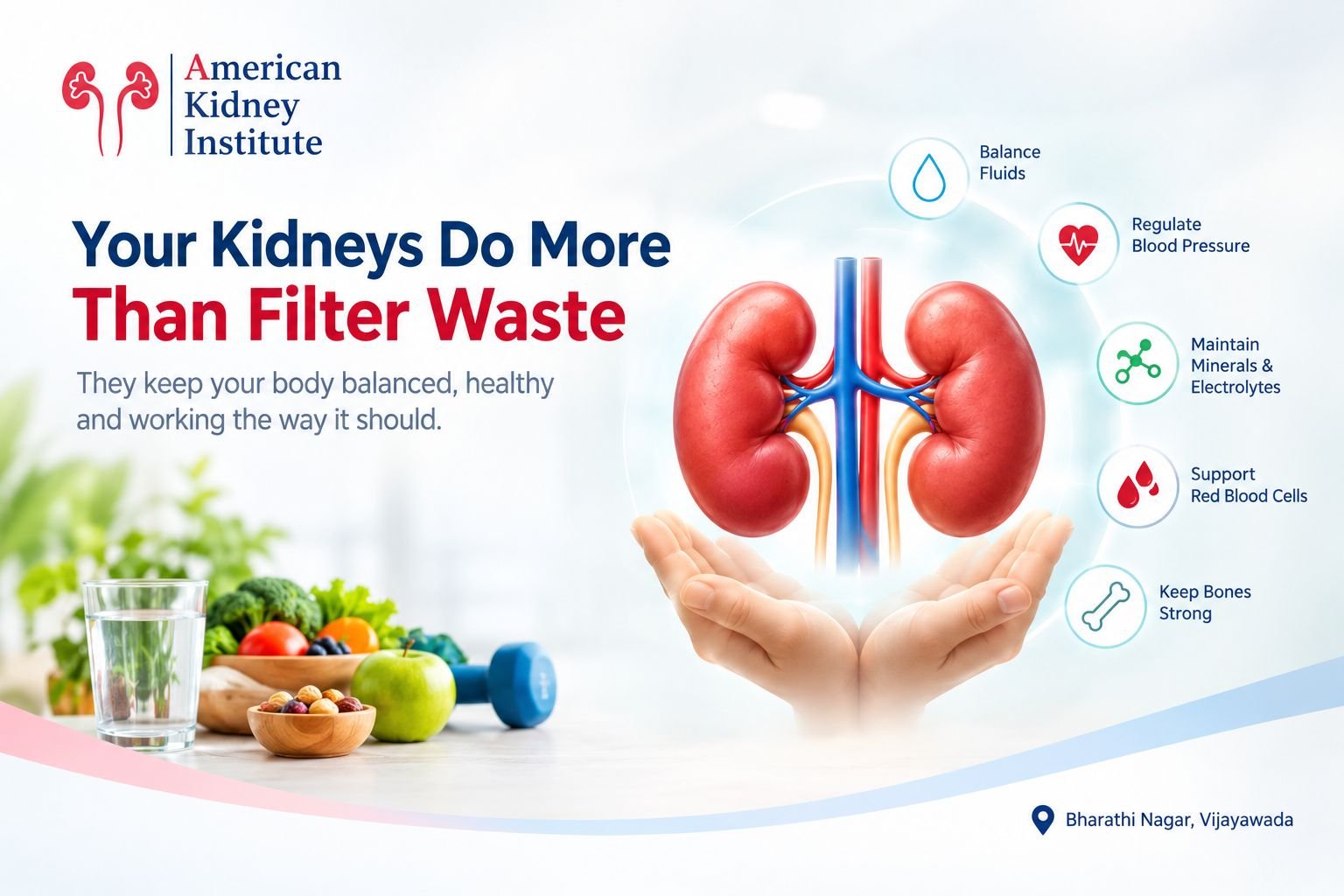
Beyond Waste Filtration: What Your Kidneys Do and Why Kidney Health Matters Your kidneys do much more than filter waste from your blood. They help maintain fluid balance, regulate blood pressure, control important minerals, support red blood cell production, and contribute to healthy bones. When kidney function is affected, these essential processes can become disrupted, sometimes before noticeable symptoms appear Understanding how your kidneys work, which everyday habits may affect them, and when to seek medical advice can help you make informed decisions about your health At American Kidney Institute in Bharathi Nagar, Vijayawada, patients can seek professional guidance for kidney-related concerns through the hospital’s nephrology services What Do Your Kidneys Do Besides Filtering Waste? The kidneys are two bean-shaped organs located on either side of the spine, below the rib cage. They continuously filter the blood, remove waste products and excess substances, and help maintain the body’s internal balance However, waste removal is only one part of their function 1. Maintain the Body’s Fluid Balance Your kidneys regulate how much water your body retains and how much leaves through urine. This helps maintain an appropriate balance of fluids When kidney function declines, the body may retain excess fluid, potentially causing swelling in the feet, ankles, hands or face. In more serious cases, fluid accumulation can contribute to breathing difficulties Fluid balance is especially important for people with chronic kidney disease or those receiving dialysis, who may need individualized fluid recommendations 2. Help Regulate Blood Pressure The kidneys play an important role in controlling blood pressure by regulating sodium, fluid levels and hormones involved in blood vessel function The relationship works both ways. Persistently high blood pressure can damage the small blood vessels inside the kidneys, while kidney disease can make blood pressure more difficult to control This is why people with hypertension should discuss appropriate kidney function monitoring with their healthcare professional 3. Balance Essential Minerals and Electrolytes Your body needs minerals such as sodium, potassium and phosphorus to support normal nerve, muscle, heart and bone function Healthy kidneys help maintain appropriate levels of these substances by adjusting how much is retained or removed When kidney function is impaired, certain minerals may accumulate in the blood. Abnormal potassium levels, for example, can affect the heart’s electrical activity and may become dangerous People with kidney disease may require regular blood tests and dietary adjustments based on their individual results 4. Support Red Blood Cell Production The kidneys produce a hormone called erythropoietin, which signals the bone marrow to make red blood cells When kidney function is significantly reduced, the body may produce less erythropoietin. This can contribute to anaemia, a condition in which the blood has insufficient healthy red blood cells or haemoglobin People with kidney-related anaemia may experience fatigue, weakness, reduced stamina, dizziness or breathlessness. However, these symptoms have several possible causes and require proper medical assessment 5. Contribute to Healthy Bones The kidneys help activate vitamin D, which supports calcium absorption and bone health. They also help regulate phosphorus levels When kidney disease progresses, disruptions in these processes can affect bone strength and mineral balance. These complications may require monitoring and treatment as part of a comprehensive kidney care plan How Can Kidney Problems Affect the Rest of Your Body? Because the kidneys perform several essential functions, kidney disease can affect more than the urinary system Depending on the underlying condition and severity, reduced kidney function may contribute to: Fluid retention: Swelling around the feet, ankles or face. Blood pressure changes: Difficulty controlling hypertension. Electrolyte imbalances: Changes in potassium or other mineral levels. Anaemia: Persistent tiredness, weakness or reduced exercise tolerance. Bone and mineral disorders: Problems involving calcium, phosphorus and bone health. Waste accumulation: A buildup of substances that the kidneys would normally remove. Not everyone with kidney disease develops these complications. The effects depend on the cause, stage and rate of progression of the condition Which Everyday Habits Can Put Kidney Health at Risk? Certain lifestyle patterns can increase the risk of kidney problems, particularly when combined with diabetes, high blood pressure, obesity or existing kidney disease Excessive Salt and Highly Processed Foods Frequently eating foods high in sodium can contribute to high blood pressure and make fluid management more difficult for some people with kidney disease Packaged snacks, processed meats, instant foods, fast food and heavily salted meals can contain substantial amounts of sodium Choosing fresh foods more often and checking nutrition labels can help reduce excessive salt intake. People who already have kidney disease should follow dietary recommendations suited to their medical condition Frequent Consumption of Sugary Drinks and Unbalanced Meals Regularly consuming large quantities of sugar-sweetened beverages and calorie-dense foods may contribute to weight gain, insulin resistance and type 2 diabetes Diabetes is a major risk factor for chronic kidney disease because persistently high blood glucose can damage the kidneys’ filtering structures over time Balanced meals, appropriate portion sizes and good blood glucose management can help reduce these risks Smoking and Tobacco Use Smoking damages blood vessels and increases cardiovascular risk. Because the kidneys depend on a healthy blood supply, smoking can contribute to a higher risk of kidney damage and may worsen existing kidney disease Avoiding tobacco is an important part of protecting overall cardiovascular and kidney health Excessive Alcohol Consumption Heavy alcohol consumption can contribute to high blood pressure and other health problems that may indirectly affect kidney health. Alcohol can also interfere with hydration and may interact with certain medicines Avoiding excessive consumption and discussing alcohol use with a healthcare professional can help you make safer choices, especially if you have an existing medical condition Taking Painkillers or Supplements Without Medical Advice Some medicines, including nonsteroidal anti-inflammatory drugs (NSAIDs), can harm kidney function in certain circumstances. The risk may be higher during dehydration or in people with existing kidney disease Some herbal products and supplements may also contain substances that affect the kidneys or interact with prescribed medicines Do not stop prescribed medication on your own. Instead, ask your