- 0 Comments
- Uncategorized
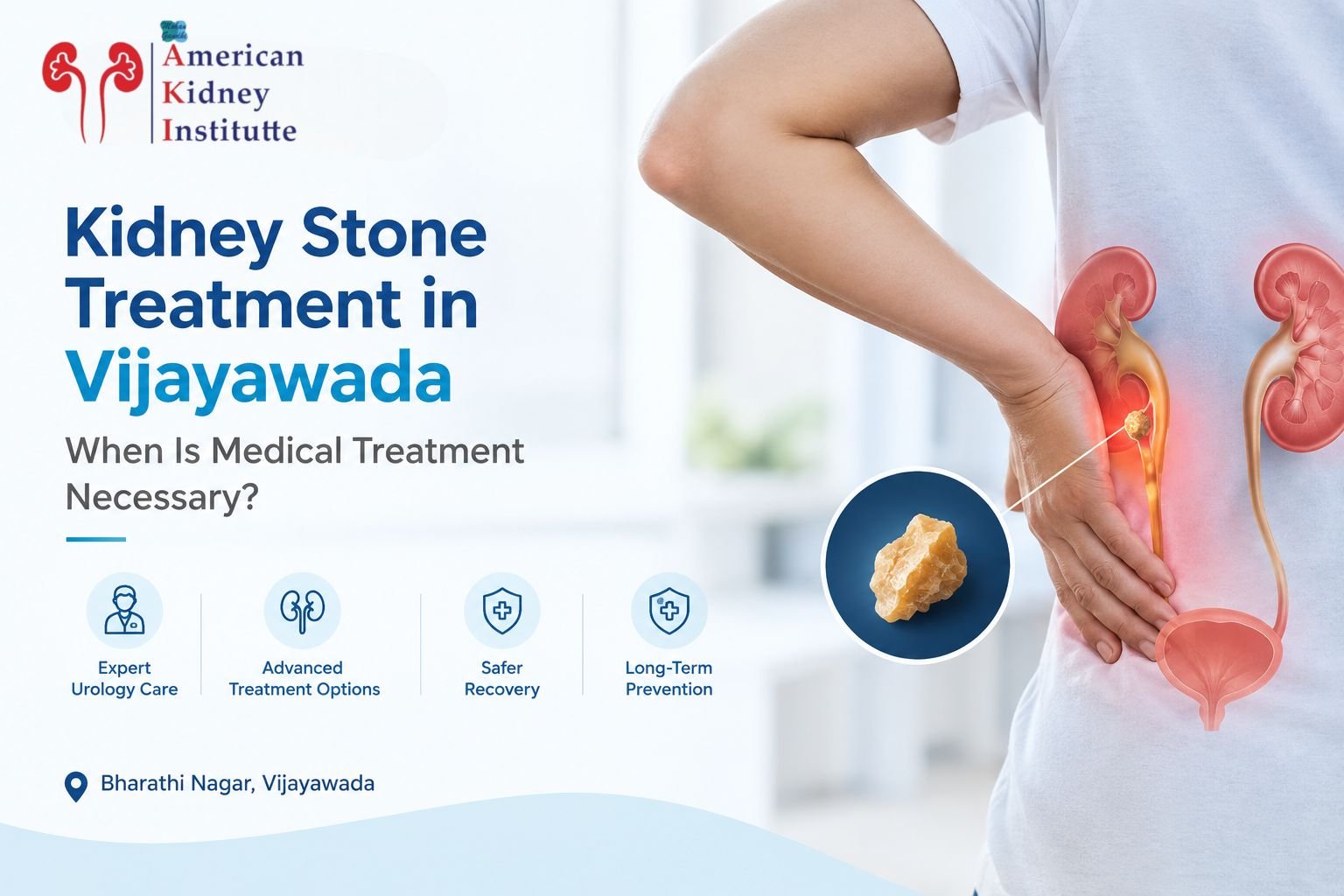
Kidney Stone Treatment in Vijayawada: When Is Medical Treatment Necessary? Kidney stones can cause sudden pain, discomfort while urinating and considerable anxiety, particularly when patients are unsure whether the stone will pass naturally or require medical treatment. While some kidney stones can be managed with observation and appropriate medical advice, others may need a procedure to prevent complications For people looking for kidney stone treatment in Vijayawada, understanding when to seek medical attention, how treatment decisions are made and what to expect during recovery can help them make informed decisions about their health At American Kidney Institute, located in Bharathi Nagar, Vijayawada, patients can seek evaluation through the hospital’s kidney care and urology services. The appropriate treatment depends on the stone’s size, location, symptoms and impact on the urinary system Can Kidney Stones Pass Naturally Without Surgery? Yes. Some small kidney stones can pass through the urinary tract without requiring surgery. However, this depends on the stone’s size and location, whether urine flow is obstructed, and whether the patient has any complications Doctors may recommend observation and medical management when a stone is likely to pass safely and there are no signs of infection or significant obstruction During this period, patients may need prescribed pain relief, follow-up imaging and other medical advice to monitor the stone’s progress However, passing a kidney stone naturally should not be assumed to be safe in every situation. A stone that blocks urine flow or causes an infection may require urgent treatment Patients should consult a qualified medical professional rather than relying on home remedies or waiting indefinitely for the stone to pass When Does a Kidney Stone Require Medical Treatment? Not every kidney stone requires the same treatment. A urologist evaluates the patient’s symptoms, imaging results and overall health before recommending a suitable approach Medical treatment or a procedure may be necessary in the following situations: Persistent or severe pain: Pain that does not improve with prescribed medication may require further evaluation and intervention Urinary obstruction: A stone that blocks the flow of urine can affect kidney function and may need treatment Infection associated with a stone: An obstructed urinary system with infection can become a medical emergency Large or difficult-to-pass stones: These stones may be less likely to pass naturally Repeated episodes: Recurrent stones may require treatment alongside an investigation into why they continue to form Changes in kidney function: A stone affecting kidney function requires timely medical assessment Fever, chills, severe pain with vomiting, or difficulty passing urine should not be ignored. Seek urgent medical attention if these symptoms occur, especially when a kidney stone is suspected What Are the Treatment Options for Kidney Stones? The choice of kidney stone treatment depends on clinical findings rather than the patient’s pain level alone. After reviewing the necessary tests, a urologist may recommend one of the following approaches Observation and medical management Suitable for selected stones that are likely to pass naturally and are not causing dangerous complications. Treatment may include prescribed pain relief, monitoring and follow-up Extracorporeal Shock Wave Lithotripsy (ESWL) This technique uses externally generated shock waves to break selected kidney stones into smaller fragments that can pass through the urinary tract. Suitability depends on factors such as stone size, location and composition Ureteroscopy with laser lithotripsy A thin instrument is passed through the urinary tract to reach the stone. A laser may be used to fragment it, allowing the pieces to be removed or passed afterward Percutaneous Nephrolithotomy (PCNL) This procedure accesses the kidney through a small incision in the back to remove selected larger or complex stones. It is generally considered when other approaches may be unsuitable or less effective Not every patient needs surgery, and not every stone can be treated with the same procedure. The treating urologist will explain the appropriate options, expected benefits and potential risks How Do Doctors Decide Which Kidney Stone Treatment Is Right for You? Before recommending treatment, doctors consider several important factors Stone size and location A small stone in a favourable location may pass naturally, while a larger stone or one lodged in the ureter may need a procedure. Size alone, however, does not determine the treatment Infection and urinary obstruction A stone associated with infection or impaired urine drainage needs prompt assessment. An infected obstructed urinary system may require emergency drainage and antibiotics, with definitive stone treatment planned according to the patient’s condition Kidney function and medical history Doctors may consider kidney function, previous stone episodes, other medical conditions, medications and whether the patient has one functioning kidney Imaging and laboratory results Depending on the case, evaluation may include ultrasound, CT imaging, urine tests and blood tests. These help identify the stone’s location, assess possible obstruction and check for signs of infection or kidney impairment The final treatment plan should be individualised to the patient’s clinical needs What Should You Expect After Kidney Stone Treatment? Recovery varies depending on the procedure, the stone’s characteristics and the patient’s overall health After treatment, some patients may experience temporary discomfort, mild blood in the urine or urinary irritation. The duration and severity depend on the procedure performed A ureteral stent may sometimes be placed to help urine drain from the kidney to the bladder. If a stent is used, the doctor will explain how long it needs to remain in place and when it should be removed Patients should follow their discharge instructions, take prescribed medication as directed and attend recommended follow-up appointments Contact your treating team if symptoms worsen. Fever, chills, inability to pass urine or severe uncontrolled pain require urgent medical assessment How Can You Reduce the Risk of Developing Kidney Stones Again? Removing a kidney stone addresses the immediate problem, but it does not always eliminate the factors that caused it The following measures may help reduce the risk of future stones: Maintain appropriate hydration: Adequate fluid intake helps increase urine volume, although fluid needs must be individualised for people with kidney or heart conditions Limit excessive salt: High