- 0 Comments
- KIDNEY CARE, KIDNEY STONES, NEPHROLOGY
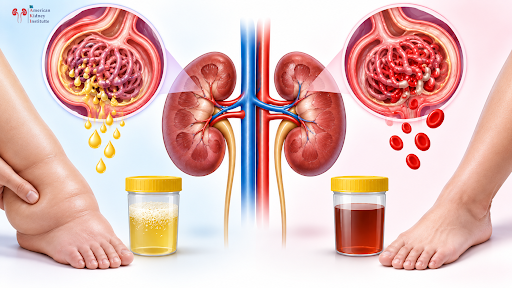
Understanding Nephrotic Syndrome and Nephritic Syndrome in Glomerulonephritis The kidneys play an important role in maintaining the body’s overall health. They filter the blood, remove waste products, balance fluids and electrolytes, and help control blood pressure. Tiny structures called glomeruli perform much of this filtering work. When the glomeruli become inflamed or damaged, a condition called glomerulonephritis can develop. Depending on the type and severity of glomerular damage, a person may develop different patterns of kidney problems. Two important clinical patterns are nephrotic syndrome and nephritic syndrome. Although both can occur due to glomerular disease, they do not present in exactly the same way. Nephrotic syndrome is mainly associated with heavy protein loss through the urine, low blood albumin levels, and significant swelling. Nephritic syndrome is more commonly associated with blood in the urine, inflammation of the glomeruli, reduced kidney function, and high blood pressure. Understanding the difference between these two patterns can help people recognize warning signs and seek appropriate medical evaluation at the right time. What Is Glomerulonephritis? Glomerulonephritis refers to inflammation or damage involving the glomeruli, which are tiny blood-filtering units inside the kidneys. Healthy glomeruli allow water and small waste products to pass into the urine while keeping important substances such as blood cells and most proteins inside the bloodstream. When the glomerular filtering barrier becomes damaged, its normal function can change. Protein may start leaking into the urine, blood cells may enter the urine, and the kidneys may become less effective at removing waste. The clinical symptoms depend on the specific type of glomerular disease. Some people may have mild changes detected only through urine or blood tests. Others may develop noticeable swelling, dark or reddish urine, reduced urine output, or increased blood pressure. Glomerulonephritis can occur suddenly or develop gradually. Some forms are temporary, while others can progress and cause chronic kidney disease if the underlying cause is not identified and managed appropriately. What Is Nephrotic Syndrome? Nephrotic syndrome is a group of symptoms and laboratory findings that occur when the glomeruli allow an unusually large amount of protein to pass into the urine. One of the most important features is heavy proteinuria. Proteinuria means the presence of excess protein in the urine. Albumin is an important protein in the blood. It helps maintain the normal movement of fluid between blood vessels and body tissues. When large quantities of albumin are lost through the urine, the blood albumin level can fall. This condition is known as hypoalbuminemia. As albumin decreases and the body’s fluid balance changes, fluid can move into surrounding tissues. This can result in swelling called edema. In severe cases, swelling can become widespread throughout the body. This severe generalized swelling may be described as anasarca. Common Features of Nephrotic Syndrome The main features may include: Heavy protein loss in urine: Large amounts of protein can pass through damaged glomeruli, resulting in significant proteinuria that can be detected through urine testing. Foamy or frothy urine: Excess protein in urine may make the urine appear unusually foamy, although foamy urine can also occur for other reasons. Low blood albumin: Continuous urinary protein loss can reduce the albumin concentration in the bloodstream. Swelling of the body: Edema may first become noticeable around the eyes, feet, ankles, or legs and may become more widespread. Weight gain from fluid retention: A sudden increase in body weight can sometimes result from accumulation of excess fluid rather than an increase in body fat. Increased risk of infections and blood clots: Some forms of nephrotic syndrome can increase the risk of complications, making medical monitoring important. Why Does Nephrotic Syndrome Cause Swelling? Swelling is one of the most noticeable symptoms of nephrotic syndrome. The kidneys may lose large amounts of protein through the urine. Albumin is particularly important because it helps maintain oncotic pressure within blood vessels. When blood albumin becomes significantly low, fluid can move more easily from blood vessels into surrounding tissues. The kidneys may also retain more sodium and water as the body attempts to restore circulating fluid volume. This can further increase swelling. The result may be edema in the legs, feet, face, abdomen, or other parts of the body. In severe cases, fluid accumulation may become widespread and cause anasarca. What Is Nephritic Syndrome? Nephritic syndrome is another clinical pattern associated with glomerular inflammation and damage. Unlike nephrotic syndrome, where heavy protein loss is the major feature, nephritic syndrome is commonly characterized by hematuria, reduced kidney filtration, and increased blood pressure. Hematuria means blood is present in the urine. When red blood cells pass through inflamed glomeruli, the urine may become pink, red, brown, or cola-colored. However, blood in urine is not always visible to the naked eye. Sometimes it can only be detected through urine microscopy or other laboratory testing. Inflammation within the glomeruli can also reduce the kidney’s ability to filter blood efficiently. As kidney filtration decreases, waste products can accumulate in the bloodstream. Fluid and sodium retention may also contribute to high blood pressure. Common Features of Nephritic Syndrome The symptoms and findings may include: Hematuria: Blood may leak through damaged glomeruli and appear in the urine as microscopic or visible blood. Dark or cola-colored urine: Significant blood in the urine can change its appearance, although urine color alone cannot confirm the cause. High blood pressure: Reduced kidney filtration and fluid retention can contribute to elevated blood pressure. Reduced urine output: Some people may produce less urine when kidney filtration is significantly affected. Mild to moderate edema: Swelling can occur, but it is often less prominent than the widespread edema seen in severe nephrotic syndrome. Reduced kidney function: Blood tests may show an increase in creatinine when the kidneys are not filtering normally. Nephrotic Syndrome vs Nephritic Syndrome Although both conditions involve the glomeruli, their typical clinical patterns are different. Nephrotic Syndrome The dominant problem is heavy protein leakage. Patients may notice: Foamy urine Significant proteinuria Low albumin levels Swelling around the eyes Swelling of the legs and feet Generalized