- 0 Comments
- KIDNEY CARE, KIDNEY STONES, NEPHROLOGY
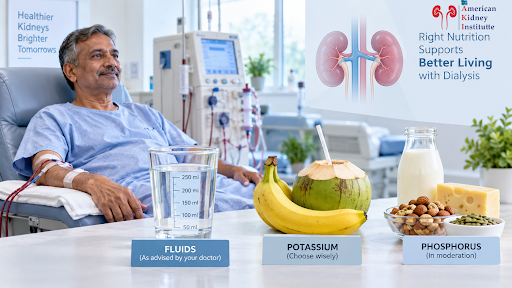
Why Should Dialysis Patients Control Water, Potassium and Phosphorus Intake? For people undergoing dialysis, food and fluid choices are an important part of everyday kidney care. When the kidneys are no longer able to remove enough waste and extra fluid from the body, substances such as water, sodium, potassium, and phosphorus can build up between dialysis sessions. Managing these levels can help reduce complications and support better overall health. Many dialysis patients have questions such as: How much water can I drink? Which foods contain too much potassium? Why should phosphorus be limited? Why does my weight increase between two dialysis sessions? These are important questions because what you eat and drink can directly affect how your body feels before and after dialysis. The right diet does not mean that you have to stop enjoying food. Instead, it means understanding which foods and drinks need to be limited, how much you can safely consume, and how to follow the fluid and dietary plan recommended by your nephrologist and dietitian. For patients looking for Dialysis in Vijayawada, understanding these dietary precautions is an important part of learning how to manage life during regular dialysis treatment. Why Do Dialysis Patients Need to Control Water Intake? Healthy kidneys continuously remove extra water from the body through urine. When kidney function becomes severely reduced, this natural process is affected. Dialysis can remove some of the excess fluid, but fluid can still accumulate between dialysis sessions. This is why dialysis patients are often advised to follow a fluid restriction based on their individual condition. The exact amount is not the same for everyone. It may depend on urine output, body size, dialysis schedule, heart condition, blood pressure, and other medical factors. Drinking more fluid than recommended can cause the body to retain excess water. This may result in swelling of the feet, ankles, face, or hands. Some people may also notice rapid weight gain between dialysis sessions. When too much fluid accumulates, it can become more difficult for the heart and lungs to handle the extra volume. In some patients, fluid overload can contribute to breathlessness, high blood pressure, and other serious complications. Therefore, fluid restriction is not simply about drinking less water. It is about maintaining a safer fluid balance between dialysis treatments. What Happens If a Dialysis Patient Drinks Too Much Water? Excessive fluid intake between dialysis sessions can lead to a condition commonly described as fluid overload. Since the kidneys cannot remove the extra fluid efficiently, the fluid remains in the body until it can be removed during dialysis. One of the easiest ways to notice excess fluid is through an increase in body weight. This is why dialysis patients are usually weighed before and after dialysis. The weight gained between dialysis sessions is often largely related to fluid accumulation rather than actual body tissue gain. If the increase is significant, removing all of that fluid during one dialysis session may be difficult or may cause uncomfortable symptoms. Large amounts of fluid removal during dialysis can sometimes lead to low blood pressure, cramps, weakness, dizziness, or nausea. For this reason, preventing excessive fluid accumulation is generally better than trying to remove a very large amount of fluid during a single treatment. Important fluid management points for dialysis patients Follow the fluid limit prescribed by your nephrologist rather than following a general number found online. Your appropriate fluid allowance depends on your kidney function, urine output, dialysis schedule, and other health conditions. Remember that fluids include more than plain water. Tea, coffee, milk, juices, soups, ice cubes, soft drinks, and other liquid foods can also contribute to your daily fluid intake. Measure your daily fluids when you have been advised to restrict them. Using a measuring cup or bottle can help you understand how much you are actually consuming instead of estimating. Reduce unnecessary thirst by controlling salt intake. Eating very salty foods can make you thirsty and may encourage you to drink more fluid, making fluid management more difficult. Do not change your fluid restriction suddenly without medical advice. If you are extremely thirsty, producing more or less urine than usual, or experiencing swelling or breathlessness, discuss it with your healthcare team. Why Is Weight Gain Between Dialysis Sessions Important? One of the important measurements for a dialysis patient is the change in body weight between treatments. This is sometimes called interdialytic weight gain. If a patient drinks a lot of fluid between two dialysis sessions, the extra water can increase body weight. A sudden increase may indicate that the body is retaining more fluid than recommended. For example, if your target or dry weight has been established by your dialysis team, a significant increase above that weight may indicate fluid accumulation. Your dialysis team can determine how much fluid needs to be removed during treatment. Patients should not compare their weight goals with another dialysis patient because dry weight and fluid requirements are individualized. The commonly mentioned goal of keeping weight gain around two to three kilograms should not be treated as a universal rule for every person. Your nephrologist should determine the appropriate target based on your medical condition. For anyone undergoing Dialysis in Vijayawada, regular monitoring of weight before and after dialysis can provide useful information about fluid balance and help the healthcare team adjust treatment when necessary. Why Is Potassium Control Important During Dialysis? Potassium is an essential mineral. It helps muscles function properly and plays an important role in maintaining the normal electrical activity of the heart. However, when kidney function is severely reduced, the body may not be able to remove potassium effectively. As a result, potassium can accumulate in the blood. A high potassium level is known as hyperkalemia. In some cases, it may cause muscle weakness, tiredness, nausea, abnormal sensations, or other symptoms. More importantly, very high potassium levels can affect the electrical rhythm of the heart and may lead to dangerous heart rhythm abnormalities. This is why potassium control is particularly important