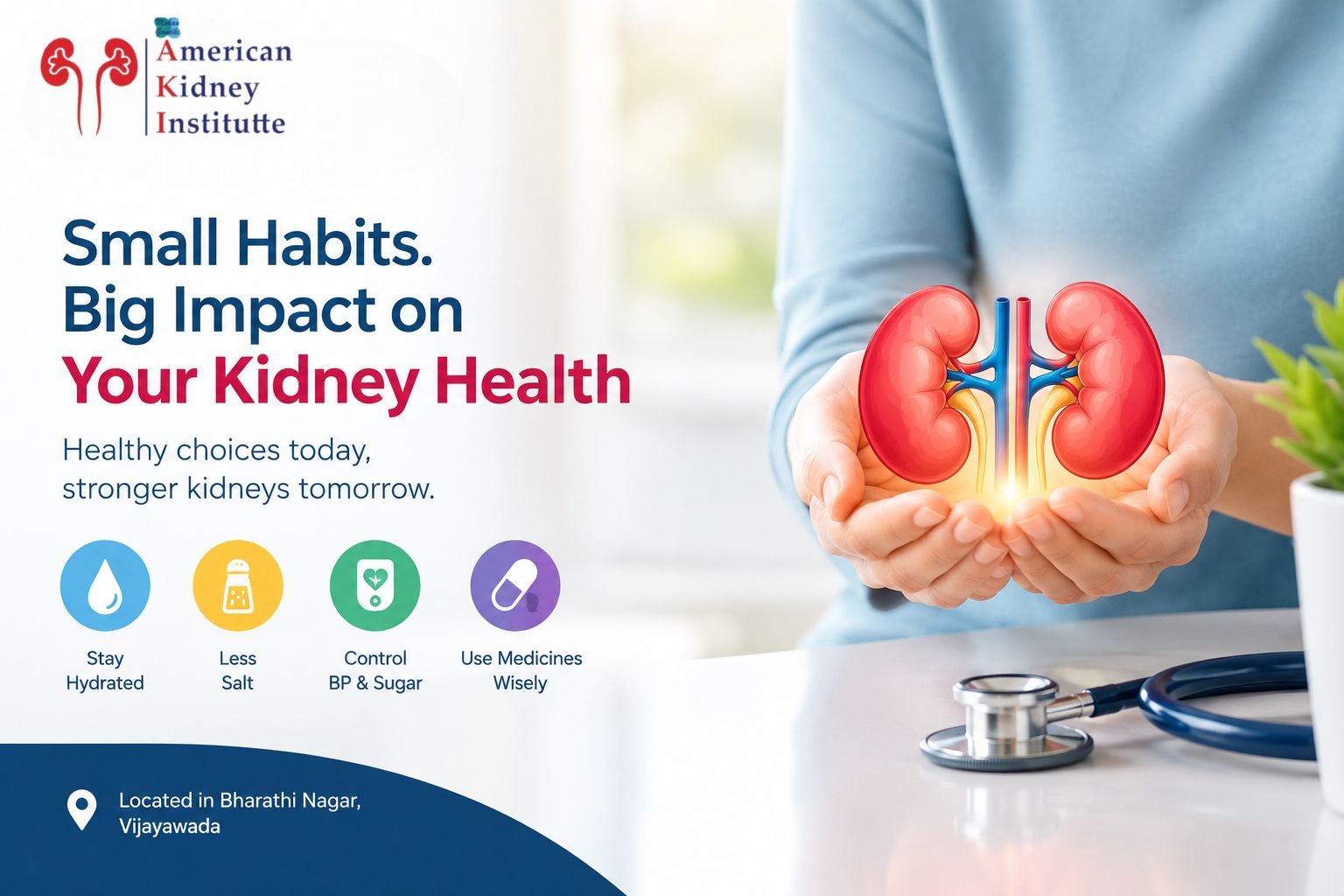
Everyday Habits That Affect Kidney Health: Why Regular Kidney Checkups Matter
Your kidneys work around the clock to keep your body healthy. They filter waste products from the blood, remove excess fluid, balance essential minerals and help regulate blood pressure. Despite performing these important functions every day, kidney health is often overlooked until a medical problem becomes noticeable
One of the biggest challenges with kidney disease is that it can develop without obvious symptoms during its early stages. A person may feel completely healthy even when kidney function has started to decline. This is why understanding everyday habits, recognizing personal risk factors and getting the right medical tests are important parts of kidney care
If you are wondering how to protect your kidneys, the answer begins with informed daily choices and timely health assessments. At American Kidney Institute in Bharathi Nagar, Vijayawada, patients can seek medical guidance for kidney-related concerns through its nephrology services
Why Do Your Kidneys Need Daily Care?
The kidneys do much more than produce urine. They help maintain the body’s internal balance by performing several essential functions.
- Filtering waste: They remove waste products and excess substances from the blood.
- Maintaining fluid balance: They regulate the amount of water retained or removed by the body.
- Balancing minerals: They help control electrolytes such as sodium and potassium.
- Supporting blood pressure regulation: They participate in mechanisms that control blood pressure.
- Supporting red blood cell production: They produce a hormone that signals the body to make red blood cells.
- Maintaining bone health: They help regulate minerals and activate vitamin D.
When kidney function is affected, these processes may become less effective. Long-term kidney damage can also increase the risk of complications involving the heart, bones, blood and other parts of the body.
Everyday Habits That May Affect Kidney Health
Some daily routines may seem harmless but can increase kidney-related risks, particularly when combined with existing health conditions. Understanding these habits can help you make better decisions.
1. Taking Painkillers Without Proper Medical Advice
Certain pain-relieving medicines, particularly nonsteroidal anti-inflammatory drugs (NSAIDs), can reduce blood flow to the kidneys and contribute to kidney injury in some situations. The risk may be higher in people with chronic kidney disease, dehydration, heart failure or other medical conditions.
Taking these medicines frequently or for prolonged periods without medical guidance can be risky.
What you can do: Consult a healthcare professional before using painkillers regularly, especially if you have diabetes, high blood pressure or a history of kidney problems. Do not stop prescribed medicines without discussing them with your doctor.
2. Consuming Too Much Salt
A diet high in sodium can contribute to high blood pressure. Over time, uncontrolled blood pressure can damage the small blood vessels that help the kidneys filter blood.
Packaged snacks, pickles, papads, instant foods, processed meats and restaurant meals can contain considerable amounts of sodium.
What you can do: Reduce excess salt, check food labels and choose fresh, balanced meals more often. If you have kidney disease, follow an individualized dietary plan recommended by your healthcare professional.
3. Drinking Too Little Water for Your Needs
Your body needs adequate fluid to maintain normal function. Significant dehydration can reduce blood flow to the kidneys and, in some cases, cause acute kidney injury. It can also increase the risk of certain kidney stones.
However, drinking excessive amounts of water does not automatically improve kidney function.
What you can do: Drink fluids according to your activity level, weather and individual medical needs. People with advanced kidney disease, heart failure or a prescribed fluid restriction should follow their doctor’s advice rather than forcing themselves to drink more water.
4. Ignoring Diabetes and High Blood Pressure
Diabetes and high blood pressure are two major risk factors for chronic kidney disease. Persistently high blood glucose can damage the kidney’s filtering structures, while uncontrolled blood pressure can strain the blood vessels inside the kidneys.
These changes may progress without causing noticeable discomfort.
What you can do: Monitor blood glucose and blood pressure as advised, attend regular medical appointments and take prescribed medicines consistently. If you have diabetes or hypertension, ask your doctor whether routine kidney function testing is appropriate.
5. Depending on Unverified Supplements or Herbal Remedies
Some supplements and herbal products may contain ingredients that can affect kidney function, interact with prescribed medicines or contain undeclared substances. A product being marketed as natural does not automatically make it safe.
The risk can be greater for people who already have reduced kidney function.
What you can do: Inform your doctor about all supplements, traditional remedies and over-the-counter products you use. Seek medical advice before starting a new product, particularly if you have an existing kidney condition.
6. Following Extreme Diets Without Medical Guidance
Very restrictive diets, inappropriate protein intake and certain weight-loss practices may not be suitable for everyone. Their effects depend on a person’s overall health, nutritional status and kidney function.
People with established kidney disease may need specific adjustments to protein, sodium, potassium, phosphorus or fluid intake.
What you can do: Choose a balanced diet and avoid extreme dietary changes without professional guidance. A dietitian experienced in kidney care can help you understand which dietary adjustments are appropriate for your condition.
Why Kidney Damage Can Go Unnoticed
Kidney disease does not always cause pain or obvious physical changes in its early stages. The kidneys can continue performing some of their functions even when damage has begun.
This means that feeling healthy is not a reliable way to confirm that your kidneys are functioning normally.
Some people may later develop swelling, changes in urination, unusual tiredness or other symptoms. However, these symptoms are not specific to kidney disease, and their absence does not rule it out.
For this reason, people with known risk factors should discuss appropriate screening with their healthcare professional instead of waiting for symptoms to appear.
Which Tests Can Help Detect Kidney Problems Early?
Kidney function tests help doctors assess how well the kidneys are working and whether there is evidence of kidney damage.
1. Serum Creatinine and Estimated Glomerular Filtration Rate (eGFR)
A blood test measures creatinine, a waste product normally removed by the kidneys. The estimated glomerular filtration rate, or eGFR, uses creatinine and other relevant information to estimate how effectively the kidneys filter blood.
A lower eGFR may indicate reduced kidney function, but results need to be interpreted in the context of a person’s medical history and other findings.
2. Urine Albumin-to-Creatinine Ratio (UACR)
Healthy kidneys generally prevent significant amounts of albumin, a type of protein, from passing into the urine. A urine albumin-to-creatinine ratio test can identify increased albumin in the urine, which may be an early indicator of kidney damage.
A person can have kidney damage even when their eGFR is relatively normal.
3. Urine Routine Examination
A urine test can identify findings such as blood, protein and other abnormalities that may require further evaluation. Depending on the results, a doctor may recommend additional tests.
4. Blood Pressure and Blood Glucose Assessment
Monitoring blood pressure and blood glucose is important because both uncontrolled hypertension and diabetes can contribute to kidney damage.
Your doctor may recommend additional investigations, such as kidney imaging, depending on your symptoms, risk factors and initial test results.
Important: Not everyone needs every test at the same frequency. People with diabetes, high blood pressure, cardiovascular disease, a family history of kidney disease or other relevant risk factors should discuss an appropriate screening schedule with their doctor.
Practical Ways to Support Your Kidney Health
Protecting kidney health involves consistent habits rather than quick fixes.
- Maintain blood pressure and blood glucose within the targets recommended by your doctor.
- Reduce excessive salt and limit highly processed foods.
- Stay physically active and work towards a healthy weight.
- Avoid smoking and discuss alcohol use with your healthcare professional.
- Use prescription and over-the-counter medicines responsibly.
- Avoid unverified supplements and extreme diets.
- Attend recommended medical checkups, particularly if you have kidney disease risk factors.
- Follow a personalized fluid and dietary plan if you already have kidney problems.
Remember that these habits can help reduce risk, but they cannot guarantee that kidney disease will never develop. Some kidney conditions are inherited or caused by illnesses that cannot be prevented through lifestyle changes alone.
When Should You Consider a Kidney Health Checkup?
You should discuss kidney screening with a healthcare professional if you have diabetes, high blood pressure, cardiovascular disease, a family history of kidney disease or previously abnormal kidney test results.
Medical evaluation is also important if you notice persistent swelling, blood in your urine, significant changes in urination or other unexplained symptoms. These changes can have several causes, so proper assessment is necessary rather than assuming they are due to kidney disease.
If you have already been diagnosed with a kidney condition, regular follow-up helps your medical team monitor changes in kidney function and adjust your care when necessary.
Kidney Care at American Kidney Institute, Vijayawada
American Kidney Institute, located in Bharathi Nagar, Vijayawada, provides nephrology services for people seeking evaluation and care for kidney-related conditions.
If you are concerned about your kidney health, have risk factors such as diabetes or high blood pressure, or need guidance about kidney function tests, consult a qualified healthcare professional to understand the next appropriate step.
Hospital: American Kidney Institute
Address: 54-15-14/2A, Near Novotel Hotel, NH-5, NH 16 Service Road, Bharathi Nagar, Vijayawada, Andhra Pradesh – 520008.
Taking care of your kidneys starts with awareness, responsible daily habits and timely medical guidance. Do not rely on symptoms alone to judge your kidney health.
Frequently Asked Questions
1. Can kidney damage occur without symptoms?
Yes. Early chronic kidney disease may not cause noticeable symptoms. Blood tests, such as serum creatinine with eGFR, and urine albumin testing can help identify kidney problems before symptoms develop.
2. Which daily habits can negatively affect kidney health?
Excessive salt intake, uncontrolled diabetes or high blood pressure, inappropriate use of certain painkillers, significant dehydration and unverified supplements may increase kidney-related risks. The impact varies according to individual health and circumstances.
3. Which tests are commonly used to check kidney health?
Common tests include serum creatinine with eGFR, a urine albumin-to-creatinine ratio (UACR), and a urine examination. Blood pressure and blood glucose assessments are also important for people at risk.
4. How often should I get my kidneys checked?
There is no single screening schedule for everyone. People with diabetes, high blood pressure or other kidney disease risk factors should ask their doctor how often they need testing based on their health and previous results.
5. Does drinking more water prevent kidney disease?
Not necessarily. Adequate hydration supports normal body function and can help reduce the risk of certain kidney stones, but excessive water intake does not prevent every type of kidney disease. People with fluid restrictions should follow their doctor’s advice.
6. Where can I seek kidney care in Vijayawada?
People seeking kidney-related medical evaluation in Vijayawada can contact American Kidney Institute in Bharathi Nagar to enquire about its nephrology services and appropriate consultation options