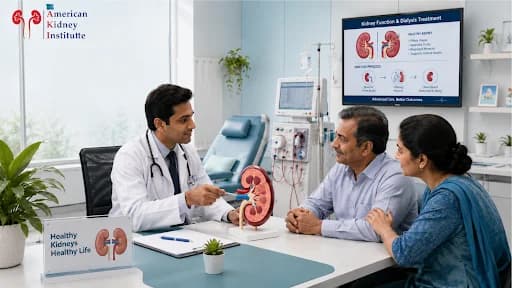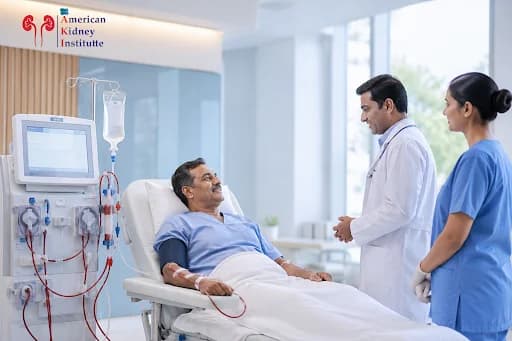
December holidays, weddings and Sankranti in mid-January bring many families home to Vijayawada and coastal Andhra Pradesh. For someone on haemodialysis, a trip like this needs one extra step: arranging dialysis away from your regular unit. Missing sessions while travelling is not safe, so the planning has to start well before the bus or train ticket is booked.
An American Kidney Institute Instagram post on reliable kidney care highlighted two things patients need: nephrology specialists and dialysis facilities. This article takes one practical angle from that message: how to plan dialysis in Vijayawada when you are visiting from another city, or when a family member on dialysis is coming to stay with you. It is general health education, not a substitute for advice from your own nephrologist.
Why you cannot simply skip dialysis on a trip
Haemodialysis removes waste and extra fluid that the kidneys can no longer clear. Between sessions, fluid, potassium and other waste build up. If a session is missed or delayed, this build-up can cause swelling, breathlessness, dangerous changes in heart rhythm from high potassium, and in some cases an emergency admission. That is why a trip on haemodialysis is planned around sessions, not the other way round.
Our page on dialysis in Vijayawada explains how haemodialysis and peritoneal dialysis work, and our guide on how often dialysis is needed explains why your schedule is set the way it is.
Step 1: Talk to your own dialysis unit first
Before you fix travel dates or look for dialysis in Vijayawada, tell your current nephrologist and dialysis unit where you plan to go and for how long. Ask them:
- Is it medically safe for me to travel now, and is there anything that should be checked first?
- Which documents should I carry for the unit that will dialyse me?
- Should any medicines, fluid limits or my target (dry) weight be adjusted while I am away?
- What should I do if I feel unwell during the trip?
Your unit knows your recent blood results, your access and how you handle sessions, so their advice comes first.
Step 2: Contact the dialysis unit in Vijayawada early
Holiday periods are busy, so contact the unit as early as possible. According to the hospital's dialysis page, American Kidney Institute in Bharathi Nagar accepts patients who already receive dialysis elsewhere, including people visiting Vijayawada. The page states that the dialysis unit has 9 machines and runs 3 shifts a day, and that the team will tell you which slots are free and arrange a consultation with a nephrologist. Slots depend on availability, so please confirm before you travel rather than assuming a place will be free.
To ask about dialysis in Vijayawada at American Kidney Institute, call 0866-2434849. For an emergency, the hospital's 24x7 line is +91 73824 34849.
Step 3: Keep your documents ready
The hospital asks visiting patients to bring their recent blood reports, their current dialysis prescription and a list of medicines. Dialysis units commonly also ask for:
- A referral or summary letter from your treating nephrologist, with your diagnosis and other health conditions.
- Your recent session records: dry weight, usual fluid removal, blood pressure trends and any problems during dialysis.
- Your access type (AV fistula, graft or catheter) and any recent access problems.
- Recent infection screening reports, if your unit has them, since many units ask for these before a new patient's first session.
Ask the Vijayawada unit exactly which reports it needs and how recent they must be, and send copies in advance if they ask. Carry paper copies as well as photos on your phone.
Step 4: Plan the journey around your sessions
Once your sessions for dialysis in Vijayawada are confirmed, a few simple habits make travel days safer:
- Try to have a session close to your departure and book your first session in Vijayawada soon after you arrive, as your nephrologist advises.
- Carry enough of every medicine for the whole trip plus a few extra days, in your hand baggage.
- Stick to your fluid limit on the journey. Long bus or train rides, tea stops and festival food make it easy to drink and eat more salt than usual.
- Protect your access: no tight bags, watches or blood-pressure cuffs on a fistula arm, and keep a catheter dressing clean and dry.
- Keep the phone numbers of both dialysis units and your nephrologist saved on your phone and written on paper.
Eating and drinking during festive visits
Festival meals are part of the joy of going home, but they are also where many people on dialysis run into trouble. Pickles, papads, sweets, fried snacks, biryani and extra cups of tea can push up salt, potassium, phosphorus and fluid. Our article on why dialysis patients should control water, potassium and phosphorus explains why these limits matter, and our winter and festive season kidney care tips give practical ideas for family gatherings.
A simple rule: enjoy small portions, ask the host for less salt where possible, and tell the dialysis team about any big weight gain between sessions so they can adjust safely.
If you are on peritoneal dialysis
Peritoneal dialysis is done at home, so travel planning is different. You will usually need enough fluid bags and supplies for the whole stay, a clean private space for exchanges, and a plan for disposal of used bags. Talk to your PD team well before travel. Some supply companies can arrange delivery to another city, but this must be organised in advance. American Kidney Institute offers both haemodialysis and peritoneal dialysis, so the team can advise if a problem comes up during your stay.
Warning signs that need urgent care while travelling
Do not wait for your next scheduled session if you have any of these. The hospital's dialysis page lists them as reasons to contact the unit or go to the nearest emergency department straight away:
- Severe breathlessness or chest pain
- Confusion
- Very low urine output
- A fistula that has stopped buzzing (no thrill)
- Bleeding from your access
- Fever if you have a catheter or are on peritoneal dialysis
Who looks after dialysis patients at American Kidney Institute
Dialysis at the hospital is planned and supervised by the nephrology team. According to the hospital's Our Expert Doctors page, the consultants are:
- Dr. Vittal Kumar Chundru, MD, DM (Nephrology), Consultant Nephrologist, Transplant Physician and Interventional Nephrologist
- Dr. Sai Swapna Atluri, MD, DM (Nephrology), Consultant Nephrologist and Transplant Physician
- Dr. Spandana Vuyyuru, MD, DM (Nephrology), Consultant Nephrologist and Transplant Physician
You can read more about the nephrology department, and about dialysis access in our guide on catheter or AV fistula.
When travel keeps getting harder
If planning every trip around dialysis sessions is becoming a burden, ask your nephrologist whether a kidney transplant could be an option for you. For many eligible patients, a working transplant makes travel easier, though it brings its own medicines and follow-up. Our article on kidney transplant vs dialysis compares the two. And if you are still adjusting to dialysis, Dialysis Is Not the End of Hope explains how many people continue to work, travel and live well on treatment.
Key takeaways
- Never skip haemodialysis sessions because of travel. Plan the trip around them.
- Talk to your own unit first, then contact the unit for dialysis in Vijayawada as early as possible, especially before the December and Sankranti holidays.
- Carry your recent blood reports, dialysis prescription, medicine list and access details.
- Keep to your fluid and salt limits during festive meals.
- Know the warning signs that need urgent care, and keep emergency numbers handy.
Reach us: American Kidney Institute, Vijayawada
If you or a family member needs dialysis in Vijayawada during a visit, or wants to move sessions to Vijayawada, you can contact American Kidney Institute in Bharathi Nagar.
- Dialysis enquiries: 0866-2434849
- 24x7 emergency and WhatsApp: +91 73824 34849
- Book or enquire online: Contact Us or the appointment page
- Address: 54-15-14/2A, Near Novotel Hotel, NH-5, NH 16 Service Road, Bharathi Nagar, Vijayawada, Andhra Pradesh 520008
Please confirm slot availability and timings with the hospital before you travel.
FAQ
Can I get dialysis in Vijayawada if I am only visiting?
Yes, American Kidney Institute's dialysis page says patients who are visiting Vijayawada or who already receive dialysis elsewhere can call 0866-2434849 to ask about sessions. Slots depend on availability, so contact the unit well before your trip.
How early should I book holiday dialysis?
As early as you can, ideally several weeks before travel and earlier for busy holiday periods such as December and Sankranti. This leaves time for the unit to check slots and for you to send any reports it needs.
What documents do I need for dialysis in Vijayawada as a visiting patient?
The hospital asks for recent blood reports, your current dialysis prescription and a list of medicines. Units commonly also ask for a summary letter from your nephrologist, recent session records, your access details and infection screening reports. Ask the unit what it needs.
Can I skip one dialysis session during a short trip?
No, do not skip or delay sessions without your nephrologist's advice. Missed sessions can lead to fluid overload, breathlessness and dangerous potassium levels.
Is peritoneal dialysis easier for travel?
It can be more flexible because it is done at home, but you need enough supplies, a clean space for exchanges and advance planning with your PD team. Your nephrologist can advise which type suits your health and lifestyle.
What should I do if I feel unwell during a trip?
If you have severe breathlessness, chest pain, confusion, very low urine output, bleeding from your access, a fistula that has stopped buzzing, or fever with a catheter or PD, go to the nearest emergency department straight away. American Kidney Institute's 24x7 line is +91 73824 34849.
Medical disclaimer
This article is for general health education only. It is not a medical diagnosis, a treatment plan or a substitute for a consultation with a qualified doctor. Kidney problems have many causes, and the right tests or treatment depend on your own medical history. Do not start, stop or change any medicine or dialysis schedule based on a blog post. If you have symptoms that worry you, or you already live with diabetes, high blood pressure or kidney disease, please speak to a qualified healthcare professional. If you have severe breathlessness, little or no urine, confusion, chest pain or rapidly worsening swelling, seek urgent medical care.
Have questions about your health?
Our specialists are here to help. Book a consultation today.
Make an AppointmentRelated articles
Smoking and Your Kidneys: How Tobacco Harms Kidney Health and When to See a Nephrologist in Vijayawada

Kidney Detox Myths: Why Chronic Kidney Disease Symptoms Need Tests, Not a Cleanse